Gutters That Move Water Away Before It Becomes a Problem
Picture a heavy Northwest downpour with nowhere to go. Water sheets off the roof, splashes the siding, and pools against your foundation, right where it can do the most harm. A well-built gutter system quietly prevents all of it, catching roof runoff and carrying it somewhere safe.
That is exactly what good gutter installation is for. Alfred’s Roofing has protected Southwest Washington homes for more than 30 years, and we build each system around your roofline and the weather it actually faces, not a one-size-fits-all template. Replacing sagging gutters or outfitting a new build, either way you get a system made to last.
Take the First Step Toward a Drier Home
Our team is happy to walk your property, talk through your options, and give you a clear estimate with no pressure attached.
What Goes Into a Gutter Installation Done Right
A gutter installation is more than hanging a channel along the roofline. A complete system works as one unit: the gutters that catch the water, the downspouts that carry it down, and the hangers holding it all steady through wind and heavy rain. Size or place any piece wrong and the whole system struggles to keep up.
The job itself is simple in theory. Catch the water coming off your roof, then move it well away from the house. Getting there takes the right gutter size, a slight slope toward the downspouts, and enough downspouts that no single one floods. Most homes today use seamless gutters, formed in one continuous run so there are far fewer joints where leaks start.
That planning matters even more across the Pacific Northwest, where steady rain and heavy tree debris test a rain gutter system nearly year-round. An undersized or poorly sloped setup backs up, overflows, and sends water exactly where you do not want it. A gutter installation built for Northwest conditions keeps runoff moving, protects your foundation and siding, and spares you the slow, costly damage that failing gutters leave behind.
What a Well-Built Gutter System Does for Your Home
The payoff of a good gutter installation shows up everywhere water would otherwise go. When runoff is captured and carried off cleanly, it stops causing the slow, hidden damage that turns into major repairs. Here is what a properly sized and installed system protects:
- Foundation Protection: Gutters and downspouts move water several feet away from the house, so it does not pool against the foundation, seep into a crawl space, or lead to cracking and settling over time.
- Longer-Lasting Siding: Directing water off the walls keeps siding from staining, warping, and rotting. It is one reason gutters pair so closely with quality siding installation, since the two work together to keep your exterior dry.
- Protected Landscaping and Soil: Controlled runoff prevents the washouts, eroded flower beds, and pooling that uncontrolled water leaves behind after a hard rain.
- Lower Maintenance: Seamless gutters have far fewer joints than sectional ones, which means fewer leaks, fewer clogs at the seams, and less upkeep year after year.
- Stronger Home Value: A clean, functioning gutter system protects the structure buyers care about most and keeps your curb appeal intact.
Add it up and the theme is simple: a good rain gutter system pays for itself by quietly preventing the expensive problems it is built to stop. None of these benefits depend on fancy add-ons, either. They come from the basics done right, the correct gutter size, proper slope, and enough downspouts to handle a heavy Northwest rain without backing up. That is where the real difference between an average install and one that lasts tends to show up. Once you know what a solid system protects, the next thing worth understanding is how these gutters are actually built, and which materials and styles hold up best over the long haul.
Ready for Gutters Built to Handle Northwest Rain?
What Are K-Style Gutters, and Are They Right for Your Home?
For most Northwest homes, K-style is the smart choice. They hold more water, hide leaks better, and look clean against almost any roofline. That combination is why they have become the most common gutter style across the Pacific Northwest.
Start with capacity. Their flat-back, angled profile holds noticeably more water than a round gutter of the same width, so they keep up when a heavy rain sends a lot of runoff off the roof at once. That extra room matters in a region where steady rain is the norm, not the exception. The shape also mounts flush against the fascia, giving the roofline a clean, finished look that suits most home styles.
The name comes from the profile itself, which resembles crown molding when viewed from the end. But that design is more than decorative. The deeper trough channels water toward the downspouts efficiently, while the folded front edge resists bending and holds its shape under the weight of water and debris. Paired with seamless fabrication, a K-style system has very few joints, which means fewer places for leaks and clogs to start.
We fabricate our seamless K-style gutters on-site, cutting each run to fit your roofline exactly. That attention to sizing and fit is what separates a gutter system that quietly does its job from one that overflows in the first real storm. To dig deeper into profiles, sizing, and how K-style compares to other options, our K-style gutters guide walks through the details.
What to Expect During Your Gutter Installation
Our process is built to be smooth, tidy, and easy to follow, so you always know what is happening on your home. From the first measurement to the final walkthrough, here is how a gutter installation with our team actually goes.
1. Consultation and Inspection
We start at your roofline. Our team measures the runs, checks how water currently moves across your roof, and looks at where it needs to end up. We also talk through your budget and the look you are after, then give you honest guidance on what will work best. No guesswork, no runaround.
2. Custom Gutter Solutions
Next, we help you choose the right system for your home. That means weighing materials like seamless aluminum, steel, and copper against your roof design, the weather your home faces, and how long you want the system to last, so the recommendation fits your situation rather than a standard package.
3. Expert Installation
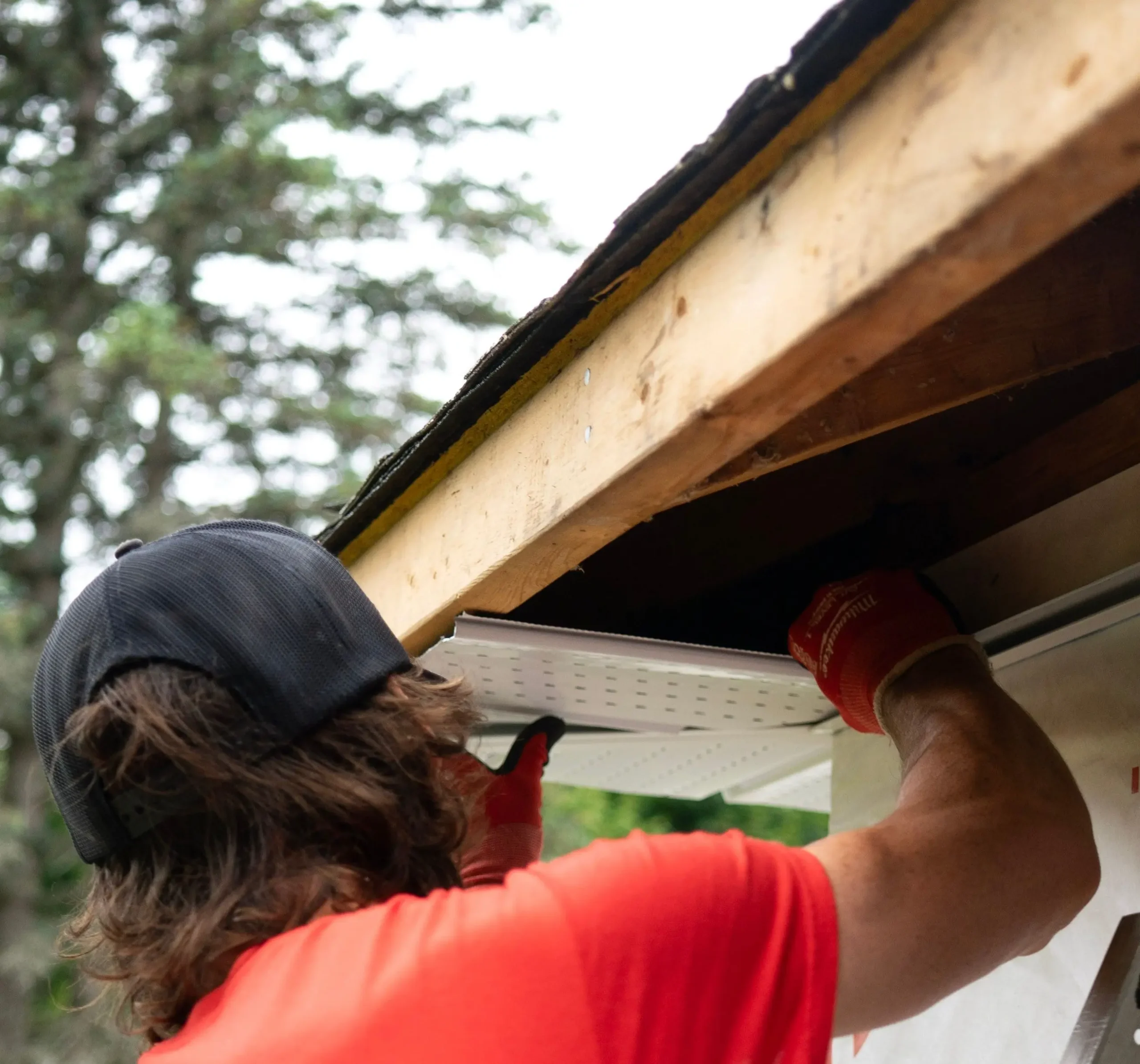
This is where the fit matters most. Our technicians fabricate seamless gutters on-site and hang them following manufacturer guidelines and local building codes. We dial in the pitch and downspout placement so water drains where it should and nothing pools or backs up. Small details here, like proper slope and secure hangers, are what keep a gutter system working for years instead of sagging after a few seasons.
4. Final Inspection and Clean-Up
Before we call it done, we run water through the system, confirm every component is secure, and check that nothing was missed. Then we clear the work area completely, hauling off the old gutters and debris so the only thing left behind is a clean install and a home ready for the next rain.
From the first visit to the last, the goal stays the same: a gutter system that fits your home, holds up to Northwest weather, and gives you one less thing to think about when the clouds roll in.
Gutter Materials and Styles: Finding the Right Fit
The right gutter depends on your budget, your roofline, and how much weather your home takes on. Most of the choice comes down to two things: what the gutters are made of, and how they are put together.
Gutter Materials
| Material | Best For | Lifespan | Trade-Offs |
|---|---|---|---|
| Aluminum | Most homes; the all-around favorite | 20 to 30 years | Rust-proof, lightweight, available seamless in many colors. Can dent under a hard impact like a falling branch. |
| Steel | Homes under heavy tree cover or debris | 20 to 40 years | Strong and dent-resistant. Heavier, and can rust over time if the coating wears. |
| Copper | Historic or high-end homes | 50-plus years | Extremely durable and beautiful as it ages. The most expensive option and needs specialized installation. |
| Vinyl | Small projects and tight budgets | 10 to 20 years | Low cost and easy to handle. Becomes brittle in cold and struggles under heavy, sustained rain. |
For most Northwest homes, seamless aluminum is the practical sweet spot: rust-proof, available in many colors, and built to last decades without a premium price. Steel is worth considering under heavy fir cover, and copper is a long-term investment for homeowners who want the look.
Seamless vs. Sectional
Sectional gutters snap together in pre-cut lengths, leaving a seam every few feet where leaks and clogs start. Seamless gutters are formed in one continuous run and cut to your roofline on-site, so the only joints are at the corners and downspouts. Seamless costs a little more up front, but with far fewer failure points, it is the system we recommend for nearly every home in a rainy climate.
Why Southwest Washington Homeowners Choose Alfred’s Roofing
Local knowledge that shapes every install. We know how Pacific Northwest rain, wind, and building codes affect a gutter system. That regional insight is why our installs get sized and sloped for the weather your home actually faces, instead of a generic spec. Homeowners across the area have trusted us with that work for years.
Craftsmanship in the details that matter. A gutter system lives or dies on the small stuff, the pitch, the hangers, the downspout placement. Our crews take the time to get those right so water drains cleanly and the system holds its shape season after season.
Licensed, insured, and respectful of your home: You will always know who is working on your property. Our team is licensed and insured, and we keep job sites organized and clean, treating your home with the same care we would want for our own.
Clear communication from the first call on. No surprises, and no hard sell. You get honest guidance, straight answers, and a free estimate up front, so you can make the right call for your home with confidence.
What Southwest Washington Homeowners Are Saying
Homeowners across the region trust us with their roofs and gutters. Here is what a few of them had to say about working with our team.
⭐⭐⭐⭐⭐
“Alfred’s did a fantastic job on the roof and gutters for our customer! They are a very professional and well run operation. I would recommend them to anyone and will be using them on our future projects moving forward!”
Steven A., Verified Customer
⭐⭐⭐⭐⭐
“Amazing company with great customer service. We had a new roof, gutters and enclosed soffit all in 3 days. They cleaned around the home after each day and everyone was polite and respectful.”
Monika E., Verified Customer
⭐⭐⭐⭐⭐
“They handled roof repairs, underlayment, and gutter replacement. Great quality work, fair pricing, and excellent service from the owner and team. Very pleased!”
Jayden J., Verified Customer
Protect Your Home Before the Next Downpour
How much does gutter installation cost?
What size gutters do I need for heavy rain?
Are gutter guards worth it in the Northwest?
How do I know if I need new gutters?
Can I install gutters myself, or should I hire a professional?
Seamless or sectional gutters: which is better?
How long does a gutter installation take?
Gutter Installation FAQs
How much does gutter installation cost?
Gutter installation cost depends on a few things: the size of your home, the material you choose, how many downspouts you need, and how complex your roofline is. Seamless aluminum tends to sit in the affordable middle, while copper runs the highest. Because every home sheds water differently, the most accurate way to get your number is a free on-site estimate rather than a rough online average.
What size gutters do I need for heavy rain?
For most Pacific Northwest homes, 6-inch gutters paired with larger 3×4-inch downspouts are the better choice. Our region’s steady, heavy rain can overwhelm standard 5-inch gutters, especially on large or steep roofs. Six-inch gutters hold more water and clog less often, which matters a lot when fir needles and debris are in the mix. The right size for your home depends on your roof area and pitch.
Are gutter guards worth it in the Northwest?
Gutter guards are often worth it here, where fir needles, moss, and leaves fall year-round. A quality guard keeps most of that debris out so water keeps flowing and you spend far less time cleaning gutters. Fine-mesh and micro-mesh guards tend to work best against small needles. Keep in mind that no guard is completely maintenance-free, so an occasional check is still smart.
How do I know if I need new gutters?
The clearest signs are gutters that sag, pull away from the house, or show rust, cracks, or holes. You might also notice water spilling over the edges during a downpour, peeling paint, or soil eroding near the foundation. If you spot several of these at once, a full replacement is usually smarter than another patch, since failing gutters tend to keep failing.
Can I install gutters myself, or should I hire a professional?
Gutter installation is harder than it looks, so most homeowners are better off hiring a professional. According to the U.S. Department of Energy’s Building America Solution Center, gutters must be sized correctly and sloped so water drains at least 5 feet away from the foundation, or moisture problems can follow. Add in ladder safety and precise measuring, and professional installation usually pays for itself.
Seamless or sectional gutters: which is better?
Seamless gutters are the better choice for nearly every home. Because they are formed from one continuous piece, they have far fewer joints, which means fewer leaks and clogs over the years. Sectional gutters cost less up front and go up piece by piece, but those extra seams are the first spots to fail, especially under the kind of steady rain we get.
How long does a gutter installation take?
Most gutter installations are finished in a single day. A typical single-family home can be measured, cut to fit, and installed in a few hours up to a full day, depending on the size of the home, the number of stories, and how complex the roofline is. Larger or multi-story homes may take a bit longer.
Get Ahead of Water Damage This Season
Small gutter problems have a way of turning into big ones. A slow drip behind the fascia or water pooling by the foundation rarely announces itself until the damage is done. A well-planned gutter installation heads all of that off, keeping runoff moving and your home dry when the weather turns.
When you are ready, our team is here to help. We will walk your property, talk through your options with no pressure, and put together a system built for the long haul. Reach out to Alfred’s Roofing for your free estimate, and we will take it from there.
