

Written by: The Alfred’s Roofing team · Reviewed by: David Skulbru Jr., Owner, WA Contractor License ALFRER*792OA
Quick Answer
TPO roofing is a white, single-ply roofing membrane for Southwest Washington homes and commercial buildings with flat or low-slope roofs.
Installed well, it typically lasts 15 to 30 years, and most home installations take 2 to 4 days. Alfred’s Roofing evaluates your roof and recommends an installation plan suited to your property.
TPO Roofing Built Around Your Low-Slope Roof’s Needs
TPO roofing is often the fix for Southwest Washington low-slope roofs, including a garage, shop, or storefront that keeps leaking after every patch. Rain can sit on low-slope roofs for days, and older tar or rolled roofing usually gives out at the seams first. A TPO roof replaces those weak seams with heat-welded ones built for long stretches of wet weather.
Alfred’s Roofing plans each TPO roofing installation around your current roof system: its drainage, its decking, and what sits on top. We install commercial TPO roofing and the flat sections of homes, and we find out why the old roof failed before the new one goes on.
Get Your Low-Slope Roof Assessed
A roof inspection shows where water is getting in and whether a repair or a new TPO roof makes more sense.
TPO Roof Coverage From the Surface to the Seals
A TPO roof is a full system: the solid deck, exposed membrane, welded seams, and flashings that seal the joint where the main roof surface meets pipes, drains, or other features. Depending on the project, the system may also include insulation, a protective cover board, and upgrades that help water drain properly.
Replacing a worn TPO roof means removing the old system and repairing the supporting deck before the new system goes on. These items should be clearly identified in each roof installation plan. TPO is one of several flat and low-slope roofing materials. It can cover an entire low-slope roof or just a section, alongside other roofing materials.
What a Well-Built TPO Roof Brings to Your Property
A properly installed TPO roofing system gives you sealed, long-lasting coverage, with material choices that fit different building needs and budgets.
- Energy Efficiency: White TPO reflects sunlight and keeps rooms below cooler on sunny days. In Southwest Washington’s mild climate, the savings are modest compared with hotter regions.
- Cost-Effectiveness: TPO usually costs less than PVC roofing. Membrane thickness and construction can also be selected around the roof’s demands and project priorities.
- Strong Heat-Welded Seams: Hot air fuses overlapping sheets into one. GenFlex, a TPO roofing manufacturer, rates welded seams three to four times more durable than glued or taped ones.
- Durability and Resistance: TPO is built for sun exposure and resists punctures, tears, UV, ozone, most chemicals, and mold or algae growth.
- Lightweight Material: TPO roofs are far lighter than tar and gravel, so they’re easy on the roof framing. The full roofing assembly still needs suitable structural support.
- Expected Lifespan: With proper drainage and regular upkeep, TPO roofing typically lasts 15 to 30 years, and thicker membranes tend to reach the higher end.
Assembling a full TPO roof system accounts for proper drainage, secure attachment, and careful detailing that support the roof’s long-term performance.
Check Whether a TPO Roof Fits Your Building
A quick walkthrough identifies whether TPO roofing or another flat roof system suits your building better.
The Steps Behind a Complete TPO Roof Installation
A full TPO roof installation follows a structured process, moving from deck preparation to attachment, welding, and final checks. Carefully following the manufacturer’s requirements helps all layers and connecting parts work together.
Inspect and Prepare the Roof Deck
The supporting deck is checked for damage and prepared for the new TPO assembly. The current roofing is removed if needed, and any soft or rotted decking is repaired or replaced before installation continues.
Install Insulation and Cover Boards
Insulation is installed in staggered rows and according to the roof design. Where specified, a cover board creates a firm protective surface beneath the TPO roofing membrane.
Laying and Securing the Membrane
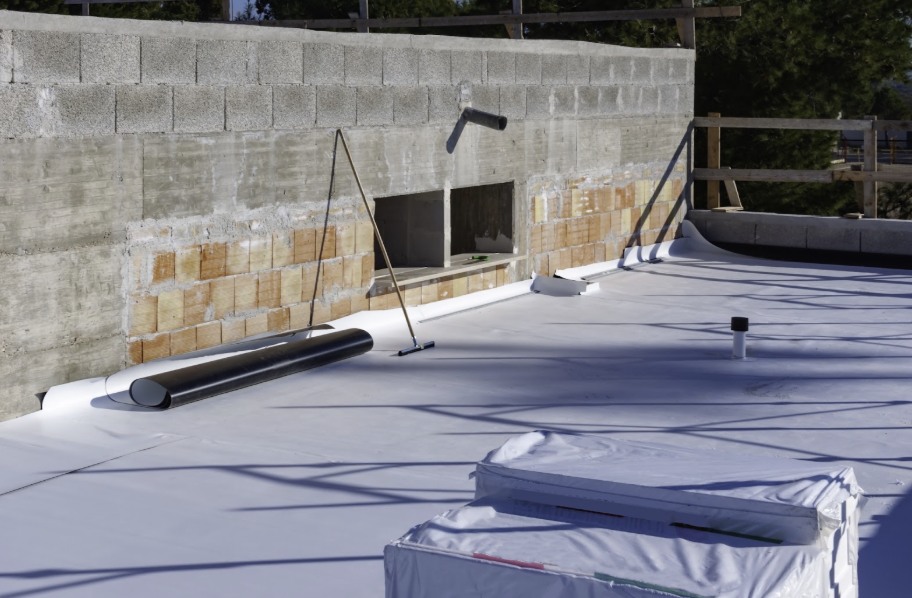
The TPO sheets are unrolled and left to relax for at least 30 minutes so they lie flat, then fastened or glued down. Fasteners and adhesives must also be compatible with the deck and roof assembly.
Welding Seams and Sealing Roof Openings
Overlapping sheets are heat-welded into seams at least 1.5 inches wide, and flashing is completed around pipes, walls, drains, and equipment. Roofing crews check the welding settings as conditions change during the work.
Final Inspection and Checking Seams
A probe (a blunt pick) checks the seams to identify gaps and weak spots that need to be re-welded. We invite you to a final walkthrough that also covers edges, flashing, and drainage paths.
Each TPO roofing installation is checked to catch installation issues before the job is considered complete.
Compare TPO Thicknesses and Membrane Types
The right TPO roof option comes down to membrane thickness and how the sheet is built. Thickness is measured in mils (one mil is one-thousandth of an inch), and a thicker TPO roof resists punctures better, but costs more upfront.
| TPO Roof Options | How It’s Built | Best For | Main Tradeoff |
|---|---|---|---|
| 45-mil | With the thinnest standard sheet | Small flat sections on homes, or light-use buildings | Thinnest wear layer |
| 60-mil | Uses mid-weight sheet | Most homes and commercial roofs | Balanced option, not for specialized roofs |
| 80-mil (90-mil from some brands) | Has the thickest sheet | Rooftops with HVAC, heavy foot traffic, and high winds | Has higher upfront cost |
| Reinforced | Uses polyester mesh (scrim) inside | Most roofs, with high tear strength | Needs a separator sheet over old asphalt roofing |
| Fleece-back | With felt backing underneath | Going over smooth asphalt and extra puncture resistance | Usually fully glued |
| Unsupported | No scrim added | Flashing around pipes and corners | Too stretchy for the main roof |
Roof access, existing roof surfaces, and the approved assembly help shape the right TPO choice. TPO roof warranty coverage still depends on the material, manufacturer requirements, and installer qualifications.
What Shapes Your TPO Roofing Estimate
Your TPO roofing estimate reflects the roof’s condition, size, and installation requirements. A full inspection separates the work your roof needs from optional upgrades.
- Roof Size and Access: Larger roofs need more material and cost more upfront. Restricted roof access can also add loading and equipment time.
- Tear-Off and Removal: Removing old roof layers adds labor and disposal, while installing a TPO roof over a sound existing roof costs less.
- Insulation and Cover Board: Local code may require more insulation than your old roof had, and tapered boards for drainage add cost.
- Membrane Thickness and Type: 80-mil and fleece-back TPO roofs cost more but can carry longer warranties.
- Penetrations and Equipment: Each vent, skylight, and HVAC unit needs hand-welded flashing, so more openings mean more labor.
- Deck Condition and Building Height: Rotted or soft decking, or work on a tall building, adds time and labor.
A clear TPO roof estimate outlines the full assembly, any needed repairs, and how hidden damage found during removal will be handled.
Clear Planning From a Licensed Roofing Team
Alfred’s Roofing is a licensed Washington contractor (license ALFRER*792OA). This means the roofing team you work with is a state-registered, insured local roofing team. We’ve also been accredited by the Better Business Bureau (BBB) since 2025, with an A+ rating.
A clear roof inspection shapes each TPO roof installation we handle. A written estimate details the membrane thickness, attachment method, drainage fixes, and warranty coverage. If we find a soft or rotting deck under your old roof, we explain how it changes the scope before going further.
We discuss drainage concerns, TPO roofing choices, and project expectations in plain language. Whether you have a home or manage a commercial building, you will understand the proposed work and what it costs before moving forward with a decision.
What Customers Share About Working With Alfred’s
⭐⭐⭐⭐⭐
“I have had the pleasure of working with Alfred’s Roofing, and I can honestly say you will have a five-star experience from start to finish. The team is incredibly professional, respectful, and easy to communicate with. Every step of the process is smooth, and they are always on time and well-prepared.”
– Marlon T., Google Review
⭐⭐⭐⭐⭐
“I’m incredibly grateful to Alfred’s Roofing for their outstanding service on my roof project. They were professional, attentive, and treated my home as their own, making the process smooth and stress-free. I highly recommend it!”
– Shelby B., Google Review
Get a TPO Roofing Plan Built for Your Property
Serving Low-Slope Roofs Across Clark County and Beyond
Alfred’s Roofing serves flat roofing projects across Clark County, covering Vancouver, Battle Ground, Ridgefield, Camas, and beyond. Our service area also extends to Washougal, La Center, Woodland, and Yacolt.
For other properties located within Southwest Washington, contact our team to confirm our service availability and talk us through your roofing needs.
TPO Roofing FAQs
How much does TPO roofing cost?
How long does TPO roof installation take?
How long does a TPO roof last in Southwest Washington?
TPO vs EPDM: which is better for my roof?
Can TPO be installed over my existing roof?
How much does TPO roofing cost?
Full TPO installations often cost about $8 to $14 per square foot in Southwest Washington. The actual project price depends on roof size, tear-off requirements, insulation, membrane thickness, and how many vents and units need flashing. A site visit gives you a written estimate before you make a decision.
How long does TPO roof installation take?
Most home TPO roof installations take 2 to 4 days, and a 10,000-square-foot commercial roof usually takes 3 to 5 working days. Full tear-off, deck repairs, and flashing around rooftop equipment add time. Seams also need dry weather for welding, so a wet stretch can push back the start date.
How long does a TPO roof last in Southwest Washington?
A properly installed and well-maintained TPO roof typically lasts 15 to 30 years, with thicker membranes and good drainage systems helping the roof reach the upper end of that range. In Southwest Washington, upkeep mostly means keeping drains clear, fixing low spots that hold water, and having seams and flashing checked once or twice a year.
TPO vs EPDM: which is better for my roof?
TPO roofs usually work best when you want welded seams and a light-colored roof, while EPDM rubber roofing often costs less and is easy to patch. When installed right, both roofing materials handle Southwest Washington’s rain well. Alfred’s Roofing installs both flat roofing options and can help you decide which material suits your building.
Can TPO be installed over my existing roof?
Yes, when the existing roof’s condition, the proposed assembly, and applicable code allow it, but wet layers or unstable surfaces can rule out the installation. A professional roof inspection helps determine whether it’s best to install TPO roofing over your existing roof or replace the full system for your building.
Start With a Free, No-Obligation TPO Roofing Estimate
Your free, no-obligation estimate begins with a conversation about the property and an assessment of the roof. Alfred’s Roofing explains the inspection findings, recommended work, and TPO roof options so you can make an informed choice.
Contact our team for a free estimate or talk us through your flat roofing needs. We offer local guidance and clear project expectations.
