

In Southwest Washington, roof moss damage is more than a cosmetic issue. It is one of the most common and expensive causes of residential roof deterioration. During February, cold temperatures, steady rainfall, and limited sunlight create ideal conditions for moss to spread and trap moisture against your shingles.
Unlike many plants, moss does not go dormant in winter. It continues absorbing and holding water, slowing proper drainage and keeping your roof wet for extended periods. That trapped moisture can seep beneath shingles and into vulnerable areas of your roofing system. When combined with seasonal rain and freeze-thaw cycles, this ongoing moisture exposure can accelerate shingle wear and structural stress.
If you notice moss forming on your roof this winter, acting before spring can help prevent deeper damage and extend the life of your roofing system.
How Roof Moss Damage Develops in Southwest Washington
Southwest Washington’s climate plays a major role in accelerating roof moss damage. Consistent moisture, mild winters, and shaded residential areas create ideal conditions for moss to spread across asphalt shingle roofs throughout the year.
Unlike dry climates where moss struggles to survive, homes in Clark County experience long stretches of damp weather with limited direct sunlight to fully dry roofing surfaces. This persistent moisture allows moss to settle, anchor itself to shingles, and expand across your roof over time. Because moss often spreads gradually and blends into darker roofing materials, many homeowners do not realize how advanced the buildup has become. In some cases, areas affected by prolonged moisture may require targeted roof repairs to prevent further structural deterioration.
Several environmental and structural factors make roofs more vulnerable to moss growth in Southwest Washington:
- Frequent winter rainfall combined with extended cloud cover
- Overhanging trees that block sunlight and drop debris onto the roof
- Cool temperatures that slow evaporation and keep shingles damp
- Roof valleys and low-slope sections where water drains slowly
- North-facing roof slopes that receive minimal sun exposure
- Older roofing systems with granule loss or surface wear
Once established, moss creates a damp micro-environment that keeps your roofing materials wet longer than they should be. Over time, this prolonged moisture exposure increases the risk of roof moss damage during the colder winter months.
How Roof Moss Damage Weakens Your Roof During Winter
Moss may appear harmless, but it can quietly compromise your roofing system. Beneath the soft green surface is a dense, sponge-like layer that traps moisture directly against your shingles, flashing, and underlying materials.
When moss traps moisture against asphalt shingles, that water does not simply sit on the surface. It can work its way beneath shingle edges and into seams, increasing the risk of roof moss damage and moisture intrusion. During winter in Southwest Washington, steady rainfall and limited drying time allow this trapped moisture to remain in place longer than it should. Here is how roof moss damage progresses during the colder months:
- Moisture Retention: Moss absorbs and holds rainwater, snowmelt, and condensation directly against asphalt shingles. This constant dampness prevents shingles from drying properly and accelerates surface breakdown.
- Shingle Lifting and Separation: As moss thickens, it can grow beneath shingle edges and begin lifting them. On asphalt shingle roofs, this separation exposes adhesive seal strips and underlayment.
- Freeze-Thaw Expansion: When trapped moisture freezes, it expands. This repeated cycle places stress on shingles and can worsen existing vulnerabilities.
- Decking and Structural Risk: Over time, moisture that moves beneath damaged shingles can reach the roof decking. Prolonged exposure may contribute to wood rot, weakened structural integrity, and interior moisture issues such as attic condensation.
Even if you do not see visible leaks, moss growing on your roof during winter is a sign that moisture is being trapped against your roofing system. Scheduling a thorough roof inspection now can help identify early roof moss damage and prevent more costly repairs before spring.
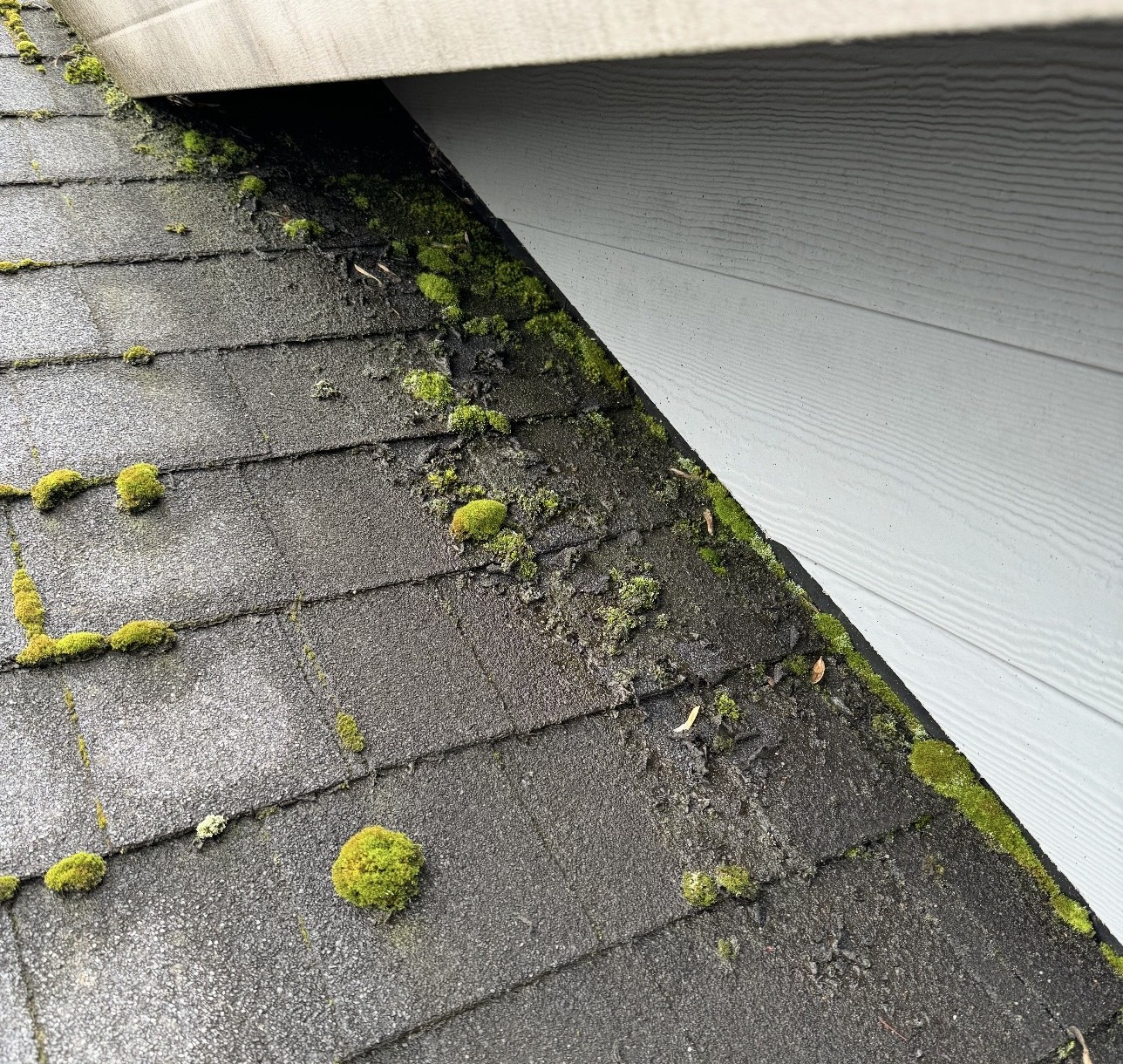
Preparation Against Roof Moss Damage in February
February remains one of the dampest and coldest periods of the year in Southwest Washington. Residential roofs face repeated cycles of rainfall, moisture buildup, and limited drying time, which can accelerate roof moss damage. Shorter daylight hours and persistent cloud cover reduce evaporation, allowing damp areas to remain saturated for extended periods. When moss is already present, these conditions create an environment where deterioration can quietly progress beneath the surface.
Taking action during this time can help prevent more serious deterioration. Moss growth often becomes more noticeable in late winter, and underlying roof damage may continue developing even without visible leaks.
Attempting to walk on a moss-covered roof during wet or freezing conditions increases the risk of personal injury and further shingle disturbance. Instead, scheduling a professional evaluation allows moss to be addressed safely and effectively.
Treating roof moss damage in February helps reduce moisture retention before heavier spring rainfall arrives. In more advanced cases where deterioration has progressed beyond repair, homeowners may need to consider partial or full roof replacement to restore long-term protection.
Roof Moss Removal and Treatment in Southwest Washington
Professional roof moss removal is a thorough process that should be handled by licensed roofing contractors to avoid further damage to your roof.
At Alfred’s Roofing, we follow a structured, multi-step approach tailored to your roof’s condition and material type. Our team evaluates how far moss has spread and determines the safest and most effective treatment strategy for your home.
Roof Inspection for Moss Growth
We begin with a thorough assessment of your roofing system to evaluate moss coverage, shingle condition, and any signs of moisture intrusion beneath the surface.
Roof Moss Removal
After identifying the extent of moss buildup, we remove it carefully and methodically. On asphalt shingle roofs, we avoid pressure washing, which can damage granules and seal strips. Instead, we use controlled, low-pressure methods and manual removal techniques designed to protect your roofing materials.
Moss Treatment
Once visible moss has been removed, we apply a roof-safe treatment solution to address remaining spores and help reduce the likelihood of regrowth. Our technicians are trained to apply treatments responsibly and safely around landscaping and surrounding properties.
Preventive Recommendations
If your roof has areas prone to moss growth, we may recommend trimming overhanging branches, improving ventilation, or addressing drainage concerns to reduce long-term moisture buildup.
When planning to treat roof moss damage in Washington, choosing a licensed and experienced roofing contractor is key. Working with a licensed, insured roofing contractor with experience in the right techniques for residential roofing moss control makes the process easier and more efficient.
Protect Your Roof from Moss Damage Before Spring Arrives
Roof moss damage can begin as a small patch of green on your shingles. Over time, trapped moisture can spread beneath the surface and compromise your roofing system.
Alfred’s Roofing has served homeowners throughout Southwest Washington and Clark County since 1994, providing experienced guidance tailored to the region’s wet winter conditions. Our team understands how roof moss damage develops on residential roofing systems and uses careful, proven roof moss removal methods designed to protect asphalt shingles and underlying materials. From detailed evaluations to responsible treatment and repair recommendations, we focus on solutions that strengthen your roof and help prevent recurring winter roof damage.
If you have noticed moss forming on your roof, now is the right time to address it. Waiting until damage becomes visible can lead to more extensive repairs. Schedule a professional evaluation before spring rainfall to help protect your home and extend the life of your roof.
