

You made it through another Southwest Washington winter. Your roof quietly took every bit of it.
Now that the skies have finally dried out, this short stretch of summer is the best window you get all year to give your roof a look before the rain returns. Summer roof maintenance in Vancouver, WA does not have to mean climbing a ladder or losing a weekend. A lot of what matters most you can spot from the ground or from inside your home in just a few minutes.
The goal is simple. Catch the small stuff now, while it is still small and the weather is on your side. This checklist walks you through it step by step, starting with what you can safely check yourself, then what is worth handing to a roofer, and how to tell the difference between the two. Think of it as a walk around your house with someone who has spent decades roofing these same neighborhoods, pointing out what to notice and what is probably fine.
What You Can Check From the Ground
You can learn a lot about your roof without ever leaving the lawn. Grab a pair of binoculars if you have them, walk the full perimeter of your house, and look up slowly on each side. You are not trying to diagnose anything. You are just noticing what looks different from last summer.
Start With the Shingles
Shingles take the worst of a wet winter, so start there. Look for any that are lifted, curling at the edges, cracked, or missing altogether, which happens most often after a windy storm. Worn, shiny patches where the surface looks smooth are worth noting too. And while you are looking up, glance down at the gutters. Sandy grit collecting in them or at the base of a downspout is called granule loss, the protective coating slowly washing off your shingles. A little is normal as a roof ages, but a pile of it after one season usually means the shingles are giving out faster than they should.
What Your Gutters Are Telling You
Now follow that grit down to the gutters themselves. After a long rainy season, the warning signs are easy to spot from the ground. Look for sections that sag, pull away from the house, or hold standing water and muck weeks after the last storm.
A good cleaning fixes most of that. What it cannot fix is a system that is undersized, rusted through, or sagging for good. When you reach that point, a fresh gutter installation is what keeps water moving away from your roofline and foundation through the months of Southwest Washington rain ahead.
Branches, Debris, and Moss
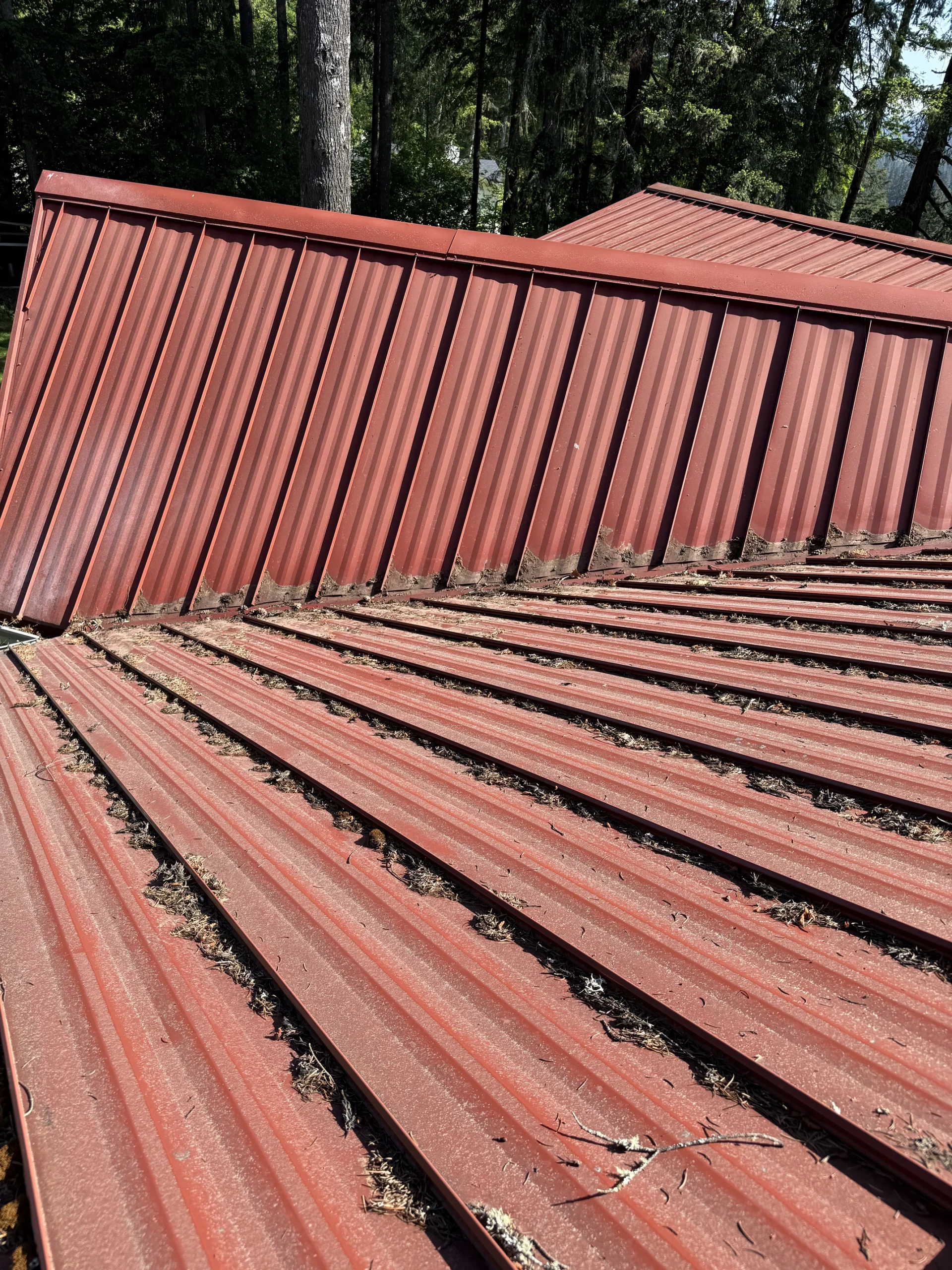
A wet winter leaves its mark in the branches, leaves, and pine needles packed into the valleys and corners of the roof. The problem is not the mess itself but the moisture it traps against the surface, which is how rot and leaks get their start. Clear whatever you can reach safely with a roof rake or leaf blower from the ground, and leave anything that means actually climbing up there for a pro.
Moss is worth a glance while you are at it. By summer the bright green growth is usually fading on its own, but thick patches still hold water against the shingles and give next winter a head start, so knock them back with a gentle brushing. Skip the pressure washer. It strips more granules than it saves.
Once you have circled the outside, the next stop is indoors, where a winter leak often shows itself before anything looks wrong up top.
Don’t Forget the View From Inside
Some of the clearest signs of a roof problem are not on the roof at all. They turn up on ceilings, in closets, and up in the attic, often weeks after the rain that caused them. Summer is the time to walk through the house and look for what winter left behind.
Start with the ceilings and the tops of exterior walls, especially in upstairs rooms. A faint brown ring, a yellowish stain, or a soft spot in the drywall usually means water got in at some point during the wet season. Keep in mind that the stain is rarely right below the leak. Water runs along the framing before it drips, so what you see inside is where it landed, not where it started.
The attic tells you even more. On a dry day, head up with a flashlight and look for damp or stained wood, matted insulation, or a musty smell that means moisture has been lingering. Daylight showing through around a vent or the chimney counts too, because any gap that lets light in can let water in. None of this spells disaster. It just gives you something concrete to point to. If you want to understand how our wet winters create these problems to begin with, our guide to winter roof damage in Southwest Washington walks through it.
What’s Better Left to a Roofer
A few checks are better left to a professional, simply because they happen in places you cannot safely or clearly see from the ground. Knowing where your own inspection ends is just as useful as knowing what to look for. These are the ones worth a phone call rather than a ladder:
- Flashing Around Chimneys, Vents, and Skylights: Flashing is the thin metal that seals these joints, and it is one of the most common places for a winter leak to start. From the ground it can look perfectly fine even when the seal underneath has lifted or cracked, so a roofer needs to get up close and reseal whatever has failed.
- Anything That Requires Walking the Roof: Soft or spongy spots in the wood, hidden damage under the shingles, and slow leaks rarely show themselves from below. A wet winter is exactly the kind of season that creates them, and climbing up to check is not worth the risk for most homeowners.
- Attic Ventilation That Is Not Doing Its Job: If your attic felt damp or smelled musty, the cause may be poor airflow rather than a leak. A roofer can check whether air is moving the way it should and correct it, since trapped moisture quietly wears a roof down from the inside.
- Tracing a Leak to Its Source: Because water travels along the framing before it drips, an interior stain is almost never directly below the actual leak. Finding the real entry point takes someone who knows how a roof moves moisture.
If you spotted active dripping or fresh damage during your walkthrough, do not wait on it. That points to a roof repair worth scheduling now.
For everything else, a professional roof inspection is the simplest way to turn a list of maybes into clear answers. Alfred’s Roofing has been inspecting and repairing roofs across Southwest Washington since 1994, so the team knows what this climate does to a roof and what it does not. They will walk the whole thing, document what they find, and tell you honestly whether you are looking at a quick fix or something bigger. You can schedule a roof inspection whenever you are ready.
Can I inspect my own roof, or should I call a professional?
When is the best time for a roof inspection in Southwest Washington?
How long does a roof last in Southwest Washington?
Is moss on my roof actually a problem?
Should I repair or replace my roof?
Summer Roof Maintenance FAQs
Can I inspect my own roof, or should I call a professional?
You can safely handle the visual part yourself. Walking the perimeter, checking your gutters, and looking for stains inside the house all give you a useful picture from the ground. The line to draw is the roof surface itself. Once a check means climbing up or getting close to the flashing, leave it to a roofer who is set up to do it safely.
When is the best time for a roof inspection in Southwest Washington?
Late spring through summer is the ideal window. Our wet season runs long here, so the dry months are really the only stretch when a roofer can safely access the roof and make repairs before the rain returns. Booking early in summer also leaves room to schedule any work without rushing.
How long does a roof last in Southwest Washington?
Most asphalt shingle roofs last around 20 to 30 years, though our wet climate can shorten that when a roof is not maintained. Constant moisture, moss, and seasonal swings wear shingles down faster here than in drier regions. Regular checkups and quick repairs are what help a roof reach the upper end of that range.
Is moss on my roof actually a problem?
Over time, it can be. Moss itself is not an emergency, but left to spread it lifts the edges of shingles and keeps the surface damp, which shortens how long the roof lasts. The bigger the patch, the more it is worth treating, and heavy or established growth is best removed by a pro rather than scrubbed from a ladder.
Should I repair or replace my roof?
It depends on the roof’s age and how widespread the damage is. A few isolated problems usually call for a repair, while a roof near the end of its life often makes replacement the smarter long-term choice. An inspection gives you the honest answer, and our roof replacement team can walk you through it if that is the route.
While the Weather’s Still on Your Side
Most of summer roof maintenance comes down to paying attention while the season lets you. A slow walk around the house, a look inside for old water stains, and a quick check of the attic will tell you most of what you need to know. The parts that mean actually getting on the roof are where a roofer earns the call.
The whole reason to look now is timing. The way we see it at Alfred’s, you want to get it replaced before it’s bad, not after it’s gone, and a roof rarely fails all at once. Problems that are cheap to fix in July can turn into bigger ones by January. An inspection is simply how you find out which side of that line your roof is on.
If your walkthrough turned up anything you are unsure about, the team is here when you are ready. You can reach out to schedule an inspection and get an honest read on your roof before the next rainy season rolls in.
