
When a Flat Roof Stops Draining in Vancouver’s Rain
Days after the rain lets up, there is still a shallow pool sitting on the roof. On a flat or low-slope building, that standing water is one of the clearest signs something is off.
Flat roofing in Vancouver has a harder job than a pitched roof. A sloped roof sheds water on its own, while a low-slope roof leans on a sound membrane and good drainage to carry our heavy rain toward the drains and scuppers. When a drain clogs or the slope sits a little too flat, water pools instead of leaving, and that weight slowly stresses the seams. What starts as a small puddle can turn into a leak, soaked insulation, and damage to the space underneath. In a climate where rain falls on and off for much of the year, drainage problems rarely fix themselves.
Alfred’s Roofing works on flat and low-slope roofs across Clark County, from downtown Vancouver storefronts to the newer buildings out toward Battle Ground and Ridgefield. Some roofs need a targeted repair, others are ready for full replacement. Either way, we start by finding the real source of the water instead of patching over the symptom.
Wondering Whether to Repair or Replace?
We will inspect your flat roof, tell you honestly what it needs, and lay out your options so you can decide with clear information.
A Flat Roof Is Only as Good as Its Drainage
Here is what surprises most people: a flat roof is not actually flat. Nearly every low-slope roof is built with a slight tilt, about a quarter inch of drop for every foot, so rain has somewhere to go the moment it lands.
That little bit of slope does more work than it looks like, especially in our corner of Washington. A steep roof lets gravity handle the draining. A low-slope roof cannot, so it leans entirely on a solid membrane and a clear path to the drains, scuppers, and gutters to carry our rain off before it settles in. We install the flat roofing systems that have earned their spot in Southwest Washington, TPO, EPDM rubber, PVC, and modified bitumen, and the right one comes down to your building, its slope, and how much equipment and foot traffic the roof has to live with. Get the membrane and the drainage right and a flat roof will quietly do its job for decades. Let either one slip and you start seeing the puddles that lead to flat roof repair, usually at the worst time of year. A look now and then, plus a quick fix while a problem is still small, is what keeps a wet winter from turning into an expensive one.
From a Small Leak to a Full Replacement
Flat roofs land us on Clark County rooftops for all kinds of reasons, some urgent, some just smart timing. Here is the range of what we take on for low-slope buildings around Vancouver.
Flat Roof Leak Repair
A leak on a low-slope roof almost never shows up where the water actually gets in. We trace it back to the real culprit, usually a split seam, worn flashing, or a bad seal around a rooftop unit, and fix the source so the same stain does not come back next winter.
Flat Roof Replacement
When a membrane has gone brittle or a roof has soaked up one too many wet seasons, patching stops paying off. We strip it down, deal with any wet insulation and drainage trouble hiding underneath, and build the new roof on a sound, dry base instead of laying good material over old problems.
New Flat Roof Installation
On new construction and additions, we install the low-slope system that fits the building, then set up the slope and drainage from the start so water has a clear way off the roof. Getting that right on day one is what saves an owner from chasing puddles down the road.
Drainage and Slope Correction
A lot of flat roof grief is really a drainage problem wearing a disguise. Where water keeps pooling, we can add tapered insulation to rebuild the slope and clear or reset the drains and scuppers, so our rain leaves the roof instead of sitting on it.
Flat Roof Maintenance and Coatings
The cheapest roof is the one that gets a look before something breaks. Seasonal check-ins, seam touch-ups, and protective coatings stretch the life of a sound roof and catch the small stuff while it is still small and cheap.
Homes with a flat section over an addition or garage get the same treatment, just on a smaller footprint. Whatever shape your roof is in, flat roofing is one piece of the wider commercial roofing services we bring to buildings across the area, so we can look at the whole structure when it needs more than the membrane alone.
Not Sure Which One Your Roof Needs?
Repair or Replace? How to Read a Flat Roof
Not every flat roof problem means a new roof, and we will not tell you it does. A lot of what we see is fixable, especially when an owner catches it early. The real skill is knowing which signs point to a simple repair and which ones mean the roof is telling you it is done.
A repair usually makes sense when the damage stays in one place: a single leak over one bay, a seam that has lifted in one spot, or flashing that has pulled away from a vent or an HVAC curb. Caught early, those are straightforward fixes that buy a sound roof several more years.
It moves closer to replacement when the trouble is spread out or baked in. A few signs worth watching for:
- Water still pooling more than a day or two after the rain stops, which points to a slope or drainage issue rather than a single leak
- Leaks in more than one spot, or the same stain coming back after it was patched
- A membrane that has gone brittle, cracked, or started pulling away from the edges
- Insulation that feels soft underfoot, a sign moisture is already inside the system
When several of those show up at once, patching turns into a yearly expense that never quite solves the problem. The honest move is usually to replace the roof once and be done chasing leaks. If you are not sure which side your roof falls on, that is what a flat roof inspection is for, and you will get both paths laid out with real numbers before you decide anything.
Why Southwest Washington Owners Call Alfred’s for Flat Roofs
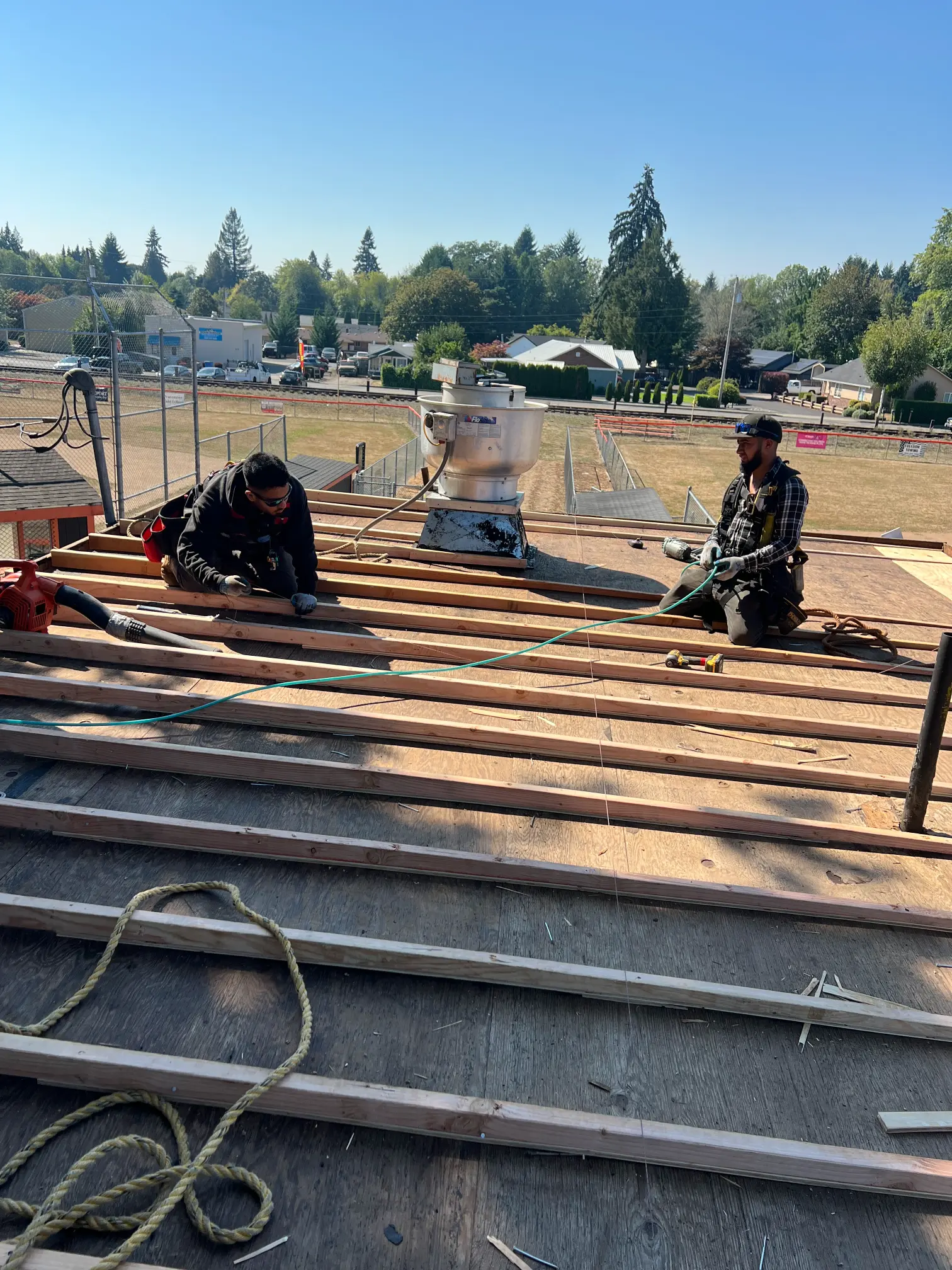
Alfred’s Roofing has been part of Clark County roofing for decades, long enough to know how a low-slope roof behaves through a full Northwest winter. Call us and you get an honest read on whether a repair or a replacement makes more sense, a free estimate you can plan around, and a crew that respects both your property and your budget. We would rather earn a roof we can stand behind than sell you one you did not need.
We also hold IKO Craftsman and GAF Master Elite certifications, a standard manufacturers reserve for installers whose work meets their mark. On a flat roof, where the quality of the install is the whole difference between dry and leaking, that kind of accountability is worth having behind the project.
What Local Property Owners Are Saying
⭐⭐⭐⭐⭐
“I highly recommend Alfred’s Roofing, they have great pricing and a very transparent team.”
Daniel L., Verified Customer
⭐⭐⭐⭐⭐
“They were awesome. They knew how to communicate and did a great job. I would highly recommend!”
Duane P., Verified Customer
Let’s Figure Out Your Flat Roof Together
Flat Roofing Across Clark County and Beyond
We take flat and low-slope work all over the region, from the older mixed-use buildings in downtown Vancouver to the newer retail and commercial construction going up around Battle Ground and Ridgefield. Each of those areas brings its own roofs and its own drainage headaches, and we have spent enough winters here to know how they behave.
Out toward Camas and Washougal, buildings near the Columbia River Gorge catch stronger wind on top of the usual rain, which is hard on flat roof edges and flashing. We serve those towns along with Woodland, Kalama, and the smaller communities across Clark County, so wherever your low-slope roof sits in the Vancouver area, there is a good chance we are already working nearby.
Why does water keep pooling on my flat roof?
What is the best flat roofing material for our climate?
How long should a flat roof last around here?
Do you repair flat roofs on houses, or only commercial buildings?
Vancouver Flat Roofing FAQs
Why does water keep pooling on my flat roof?
Pooling almost always comes back to drainage. A clogged drain or scupper, a low spot in the membrane, or a deck that has begun to sag can each trap water instead of letting it run off. Clearing the drains is the first thing to check; if the water still sits after that, the slope itself may need correcting.
What is the best flat roofing material for our climate?
There is no single best one, only the best fit for your building. In our heavy rain, welded membranes like TPO and PVC shed water well, EPDM rubber lasts and repairs easily, and modified bitumen still suits some older roofs. Slope, budget, and rooftop traffic decide it.
How long should a flat roof last around here?
It depends on the system on your building. Modified bitumen roofs usually run 15 to 20 years, while single-ply membranes such as TPO, EPDM, and PVC commonly reach 20 to 25, and some EPDM roofs go longer. Install quality and steady drainage matter as much as the material you pick, so a maintained roof almost always outlives a neglected one.
Do you repair flat roofs on houses, or only commercial buildings?
Both. Plenty of homes here have a low-slope section over an addition, garage, or porch, and those spots leak and pond the same way a commercial roof does.
Get Ahead of the Next Leak
A flat roof problem only gets more expensive the longer it waits, and the fix is often smaller than owners expect. Tell us what you are seeing up there and we will give you an honest assessment, clear options, and a plan that fits the roof in front of us. Schedule your flat roof visit to get started.
