Quick Answer: Architectural shingles are multi-layered asphalt shingles that add texture, curb appeal, and stronger weather protection than older three-tab shingles. In Southwest Washington’s damp climate, they typically last 20 to 30 years with regular moss treatment. Alfred’s Roofing installs and repairs architectural shingle roofs, with free estimates before any work begins.
Architectural Shingles Built for Southwest Washington Weather
Architectural shingles are usually what homeowners land on after the second or third patch job stops holding. It starts with dark streaking across the north slope, then moss creeping up under the tabs, then a few shingles gone after a windy stretch in February. Southwest Washington is hard on thin roofing: steady rain, heavy tree cover, and slopes that never fully dry out between storms. A layered shingle sheds water better and holds its seal longer than the flat three-tab it replaces.
Architectural shingles are now the standard rather than the upgrade. They make up roughly 95 percent of asphalt shingle demand in the U.S., and most manufacturers are phasing three-tab out of their lineups entirely. The extra thickness and granule layering resist wind uplift and water intrusion far better, with most architectural lines rated to 110 or 130 mph against roughly 60 mph for three-tab. Alfred’s Roofing has been installing these systems across Clark County since 1994, and we walk you through which shingle line actually fits your roof, your budget, and how long you plan to stay in the house.
Find Out What Your Roof Actually Needs
A quick on-site evaluation tells you whether architectural shingles make sense now, or whether a repair buys you a few more years.
What Architectural Shingle Installation Covers
Architectural shingle installation covers inspection, material selection, tear-off, deck repair, and the layered system that goes back on top. The existing roofing comes off, the deck gets checked and repaired where it’s soft, new underlayment and flashing go down, and the shingles are set to match your roof’s slope and exposure. It is not a shingle swap. It’s a full roofing system built in layers, and each layer does a specific job.
A standard roof installation job typically includes starter strips along the eaves, ridge cap shingles at the peak, and flashing around chimneys or vents where water tends to enter. Each project starts with a clear scope depending on your roof’s pitch, valleys, penetrations, drainage, and deck condition. If there is hidden damage revealed during roof tear-off, the structural repairs are reviewed before work continues.
Two things matter more here than in most of the country. Ventilation, because a poorly vented attic traps moisture through nine months of wet weather and shortens the life of the shingles above it. And algae resistance, because north-facing slopes under tree cover streak and grow moss fast. Both get decided during installation, not after.
What an Architectural Shingle Roof Brings to Your Home
Architectural shingles hold up longer, resist wind better, and look considerably more expensive than they are.
A Roof That Looks Like Shake or Slate
Architectural shingles come in profiles that mimic wood shake or slate tile, at a fraction of what either material costs installed. The shadow lines are the reason: layering two shingle pieces creates real depth, so the roof reads as textured from the street instead of flat. Color range is wide, and darker blends tend to hide the light streaking that shows up on Southwest Washington’s shaded slopes.
Wind Resistance That Holds Through Storm Season
Most architectural shingle lines are rated to 110 or 130 mph, compared to roughly 60 mph for three-tab. That gap shows up during fall and winter storm season, when the wind comes up the Columbia River Gorge and thin shingles start losing tabs. The extra weight helps too: architectural runs 250 to 450 pounds per square against about 200 to 250 for three-tab, so there is simply more shingle staying put.
20 to 30 Years, If the Roof Gets Maintained
A quality architectural shingle roof in Southwest Washington realistically lasts 20 to 30 years. Manufacturer warranties often say 30 to 50, but those numbers assume drier climates and ideal upkeep. Around here, roofs that never get moss-treated tend to come off closer to year 15, while roofs that get treated every two to three years reach the upper end of the range. The maintenance is the variable, not the shingle.
Built-In Moss and Algae Resistance
Most current architectural shingle lines include copper granules that slow the algae streaking and moss growth this region is known for. That matters on north-facing slopes and anywhere tree cover keeps the roof damp, which is where roofs here fail first. OSU Extension notes that moss on asphalt roofs traps moisture and can lift shingles, letting water reach the layers underneath. Algae resistance does not eliminate maintenance, but it buys years before the black streaking starts.
The trade-off is real: architectural costs more upfront than three-tab. It also lasts roughly twice as long here, which is why almost nobody chooses three-tab anymore.
See the Shingle Profiles in Person
Color and texture look different on a sample board than they do on a roof. We bring samples out and show you what each profile looks like installed.
How an Architectural Shingle Installation is Completed
Every architectural shingle project runs the same five steps, whether it’s a replacement or a new build. Most of it happens in one to three days, and the parts that surprise homeowners are usually what we find under the old roof rather than the install itself.
Step 1: Initial Inspection and Assessment
Our roofers check the shingles, flashing, decking, gutters, and attic, and the attic matters as much as the roof surface. Moisture staining on the underside of the decking tells us things a surface look will not. You’ll get a written estimate and clear guidance on material options before any work moves forward.
Step 2: Job Site Preparation
Once the estimate and scope are approved, our crews tarp your landscaping, walkways, and patio and position the dumpster where it will not block your driveway. Ladders, harnesses, and safety rails go up to meet OSHA requirements. Tell us about anything fragile near the house before the crew arrives, since that is easier to protect than to replace.
Step 3: Roof Tear-Off and Deck Inspection
Old shingles, underlayment, and flashing come off down to the bare deck. This is the step where hidden damage shows up: rot along the eaves, soft spots under a valley, decking that has been wet long enough to lose its hold on a nail. We show you what we find and price the repair before we cover it, because a new roof over bad decking fails early.
Step 4: Underlayment, Flashing, and Shingle Installation
Underlayment and ice-and-water shield go down first, concentrated in the leak-prone spots, followed by new flashing at chimneys, valleys, and wall transitions. Then the architectural shingles are fastened to manufacturer specification, which matters because nail placement is what most warranty claims come down to. Ridge vents or other ventilation components go in at the same time to keep attic airflow moving.
Step 5: Final Cleanup and Walkthrough
Our crews clear debris off the roof and out of the gutters, then run magnetic rollers across the yard and driveway to pick up stray nails. Then we walk the property with you. If something is not right, we would rather hear it while the crew and the equipment are still on site.
Most architectural shingle roof replacements take one to three days. A straightforward single-layer tear-off on a simple roof can finish in a day. Multiple existing layers, steep pitch, dormers and skylights, or decking repairs push it longer, and weather can move the schedule in either direction.
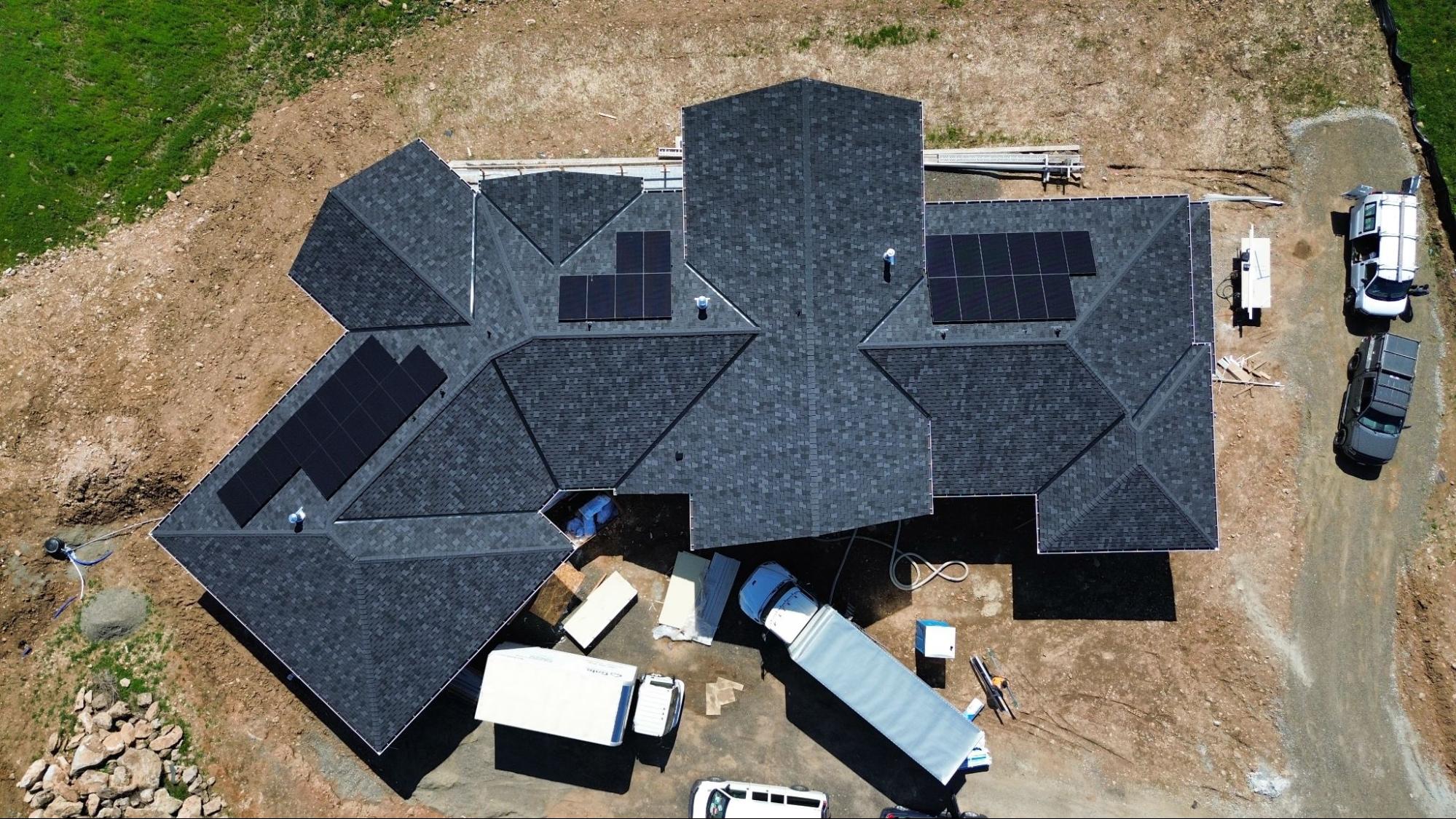
How Architectural Shingles Compare to Other Asphalt Options
The asphalt shingle choice comes down to three tiers, and for most Southwest Washington homes the middle one wins. Three-tab is the flat, single-layer shingle that used to be standard and is now being phased out of manufacturer lineups. Architectural is the layered shingle that replaced it, and it accounts for roughly 95 percent of asphalt shingle demand today. Designer shingles are heavier architectural products built to imitate slate or cedar shake more convincingly, at a higher price.
| Trait | Three-tab | Architectural | Designer |
|---|---|---|---|
| Typical wind rating | About 60 mph | 110 to 130 mph | 110 to 130 mph |
| Real-world life here | 15 to 20 years | 20 to 30 years | 25 to 35 years |
| Look | Flat, uniform rows | Layered, dimensional | Slate or shake imitation |
| Weight per square | 200 to 250 lbs | 250 to 450 lbs | 400 to 500 lbs |
| Relative cost | Lowest | Mid | Highest |
Three-tab still shows up on rentals and on repairs where the goal is matching an existing roof, but it is rarely the right call on a home you plan to keep. If you want the slate or shake look and the budget allows it, designer shingles are worth comparing side by side. For most homes here, architectural shingles hit the point where the money stops buying meaningfully more roof.
Architectural Shingle Services for Different Roof Needs
Alfred’s Roofing works on architectural shingle roofs at every stage, not just full replacements.
New Roof Construction
On a new construction build, we install the shingle system from the deck up, which means the underlayment, flashing, and ventilation all get specified together instead of worked around. We match the shingle profile and color to the home’s design, and we plan the ventilation for a house that will sit in this climate for decades.
Roof Installation and Replacement
Our crews strip the old roofing, inspect the decking underneath, and install a new architectural shingle system with starter strips, underlayment, and ice-and-water shield at the leak-prone spots. Most homes here are on their second or third roof by now, and what we find under the old one usually decides how the day goes.
Roof Repairs and Leak Correction
Not every roof needs replacing. We handle missing tabs, localized storm damage, and flashing leaks at chimneys and valleys without touching the sections that are still sound. When a roof has ten good years left in it, a repair is the honest recommendation, and we will tell you that even though the replacement is the bigger job.
Routine Maintenance
Maintenance is what decides whether an architectural shingle roof reaches 20 years or 30. We handle scheduled debris removal, moss and algae treatment, and preventative roof inspections that catch small problems while they are still small. In this climate, treating moss every two to three years is the difference between the two ends of that range.
Our residential roofing crews cover single-family homes across Clark County, and we run architectural shingle systems on multi-unit and commercial buildings as well.
What Affects the Cost of an Architectural Shingle Roof
Architectural shingle pricing comes down to what the roof actually is, not how big the house is. Two homes with the same square footage can land thousands apart once pitch, existing layers, and decking condition are in the picture. That is why we price from an on-site look instead of a phone call. Six things move the number more than anything else.
Roof Size and Pitch: A larger roof needs more shingles, and a steeper one needs more labor and more safety setup to work on. Pitch tends to surprise people more than square footage does.
Removing Existing Layers: Removing two layers of old shingles adds labor, disposal fees, and usually another day of work.
Decking Condition: Rot or soft spots found during tear-off have to be repaired before anything goes back on. This is the most common reason an estimate changes mid-job, and it is why we price the repair in front of you instead of after.
Shingle Material: Architectural shingles come in several tiers, from standard laminate up to heavier designer profiles. Moving up a tier buys a longer warranty and a better look, and it adds meaningfully to the material line on the estimate.
Ventilation Needs: Adding or upgrading ridge vents to meet the attic’s airflow needs is often necessary and adds to the scope.
Roof Access Difficulty: Steep driveways, tight lot lines, or a hard-to-reach roof can require additional preparation time, equipment, and cost.
The only way to get a real number is to have someone walk the roof. We measure, check the decking condition, count the layers, and hand you a written scope with the price attached to it.
Why Homeowners Here Call Us for Shingle Work
Alfred’s Roofing is an IKO Craftsman Premier contractor, the top of IKO’s three certification tiers. That certification is what lets us write IKO’s extended Iron Clad Protection warranty on the roofs we install, which an uncertified installer cannot offer no matter which shingles they put on your house.
We have been installing and repairing roofs across Clark County since 1994, which means our crews have watched architectural shingles come through three decades of Pacific Northwest winters and know which ones hold their granules and which ones streak early. We are licensed and insured in both states we work in: Washington registration ALFRER*792OA and Oregon CCB #257335.
We walk you through the options honestly and explain the trade-offs in plain language, including the times when the cheaper choice is the right one. You should not have to guess what happens at any stage of the project, or what it is going to cost when it’s done.
What Homeowners Say About Their Roofing Experience
⭐️⭐️⭐️⭐️⭐️
“Great job on our new roof. Fast, reliable looks super. Would recommend Alfred’s to anyone.”
– J. Johnson, Google Review
⭐️⭐️⭐️⭐️⭐️
“I’m incredibly grateful to Alfred’s Roofing for their outstanding service on my roof project. They were professional, attentive, and treated my home as their own, making the process smooth and stress-free. Highly recommend!”
– Shelby B., Google Review
⭐️⭐️⭐️⭐️⭐️
“I could not be happier with experience with Alfreds Roofing! David and Erik went above and beyond with the communication and availability for any question that I had thought the whole process. The crew that worked on my home were all professionals and kind. I would highly recommend Alfreds Roofing to anyone looking to replace or repair their roof! Thank you David, Erik and the whole crew for a job well done!”
– John B., Google Review
Get Your Roof on the Schedule
There is no charge for the estimate and no obligation attached to it.
Where We Install Architectural Shingle Roofs
We install and repair architectural shingle roofs across Clark County and the surrounding parts of Southwest Washington. Most of our work sits in Vancouver, Battle Ground, Camas, Ridgefield, and Washougal, and our crews also head north to Kelso, Longview, and Chehalis. We are licensed in Oregon as well, so homes across the river in the Portland metro are within range.
The roof gets the same crew standards wherever it is. A job in Woodland gets the same tear-off inspection, the same flashing detail, and the same cleanup as one two miles from the shop.
Architectural Shingles FAQs
Are architectural shingles worth the extra cost over three-tab shingles?
How long does it take to replace a roof with architectural shingles?
Can architectural shingles be installed over my existing roof?
Do architectural shingles need any special maintenance?
What brands of architectural shingles does Alfred's Roofing install?
Are architectural shingles worth the extra cost over three-tab shingles?
Yes, for almost anyone staying in the house. Architectural shingles cost more upfront but last roughly a decade longer here, and the wind rating is close to double. The bigger point is that three-tab is being phased out of manufacturer lineups, so it is increasingly a repair-match or rental option rather than a real choice for a home you plan to keep.
How long does it take to replace a roof with architectural shingles?
Most architectural shingle replacements take one to three days. A single-layer tear-off on a straightforward roof can finish in a day with a full crew. Multiple existing layers, a steep pitch, dormers and skylights, or decking repairs found during tear-off all add time, and rain can push the schedule.
Can architectural shingles be installed over my existing roof?
Sometimes, but not if the roof already has two layers. Washington code caps a roof at two total coverings, and an overlay is also off the table if the existing roof is water-soaked, deteriorated, or made of tile or slate. Even where it is allowed, going over the old roof means nobody inspects the decking underneath.
Do architectural shingles need any special maintenance?
Yes, and in this climate it is the difference between 20 years and 30. Plan on clearing debris, treating moss and algae every two to three years, and having someone look at the roof after a hard windstorm. Roofs here that never get treated tend to come off closer to year 15.
What brands of architectural shingles does Alfred’s Roofing install?
We install IKO architectural shingles and hold IKO Craftsman Premier certification, the top of their three contractor tiers. That certification lets us write IKO’s extended Iron Clad Protection warranty on the roofs we install. We will walk you through the specific lines and warranty options during the estimate.
What Happens When You Call Us
A roofer comes out, walks the roof, checks the decking and flashing, and looks in the attic. You get a written estimate with the scope laid out, and you get told plainly whether the roof needs replacing now or whether it has a few more years in it. There is no charge for any of that.
Thirty years of roofing in Clark County has taught us that homeowners make better decisions when someone explains the trade-offs instead of pushing the biggest job. Schedule your free estimate and we will tell you what your roof actually needs.
