
TL;DR
Early fall, roughly mid-September through mid-October, is the best time to treat roof moss in Southwest Washington.
Moss starts growing again when the rain returns, and treatments work best on actively growing moss.
There are still enough dry days to apply them safely before the wet months give moss time to lift your shingles. If shingles stay raised or you spot bare patches after the moss is gone, schedule an inspection.
By the time steady rain returns each fall, the moss on many Clark County roofs starts to change. Patches that sat brown and brittle all summer plump up and turn bright green, usually first on the shadiest side of the house. That color shift marks the start of the months when moss does most of its harm.
Recommendations on timing vary widely, from clearing moss in bone-dry midsummer to waiting until it is actively growing. For roof moss removal in Southwest Washington, early fall works best, and the reasons have as much to do with protecting your shingles as with killing the moss.
Below, Alfred’s Roofing draws on more than 30 years of local roofing experience to explain why timing matters and how to spot damage that a cleaning alone cannot fix.
Dry Season or Rainy Season? Where the Moss Timing Debate Comes From
The case for moss removal in the summer is about safety and ease. A dry roof offers far better footing, and moss baked by the July sun turns brittle, so it lifts away with less scrubbing.
The case for waiting until the rain returns comes from how treatments work. Moss needs moisture to grow, so it nearly stops growing during our dry months. Makers of common moss control products note that growth picks back up with the fall rains and that treatment works best during active growth. Patches treated while dormant in midsummer may not die off completely and can green up again once the weather turns.
Both camps have a point, and early fall in Southwest Washington happens to satisfy both.
Why Early Fall Is the Best Time to Remove Moss From Your Roof in Southwest Washington
Early fall, roughly mid-September through mid-October, is the sweet spot for treating roof moss in Southwest Washington. Our climate pairs a long wet season with a short dry one. Vancouver averages about 37 inches of rain a year, yet July and August together bring less than an inch, according to NOAA climate normals for Vancouver.
That window sits right at the turning point. Average rainfall climbs from about 1.4 inches in September to 3.4 inches in October and 5.5 inches in November. The moss is active again, yet dry stretches still come between showers. That matters because most moss products need a dry roof and a few rain-free hours, since rain or heavy dew can dilute them or wash them away. Treating now also denies moss months of rain to spread under shingle edges.
Shade decides how quickly moss returns. Douglas fir makes up about 16 percent of Vancouver’s public trees, more than any other species, and older tree-lined stretches like the Old Evergreen Highway corridor keep many roofs in shade for much of the day. Wooded lots around Hockinson and Brush Prairie tend to follow the same pattern.
Here is how each season compares for roof moss treatment in our area.
| Season | What the moss is doing | Roof conditions | How well treatment works |
|---|---|---|---|
| Summer (July to August) | Dormant, dry, and brittle | Dry with the best footing | Weaker, since moss is barely growing |
| Early fall (September to October) | Growing again with the first rains | Dry days between showers | Best, with active moss and dry days to apply |
| Late fall and winter (November to February) | Growing steadily in mild, wet weather | Wet, slick, and rarely dry | Works on the moss, but safe dry days are scarce |
| Spring (March to May) | Still active | Drying out, with mixed weather | Good, but moss has had a full wet season |
Only early fall combines active moss, workable weather, and a head start on the wet season.
What Moss Does to Shingles Over a Wet Season
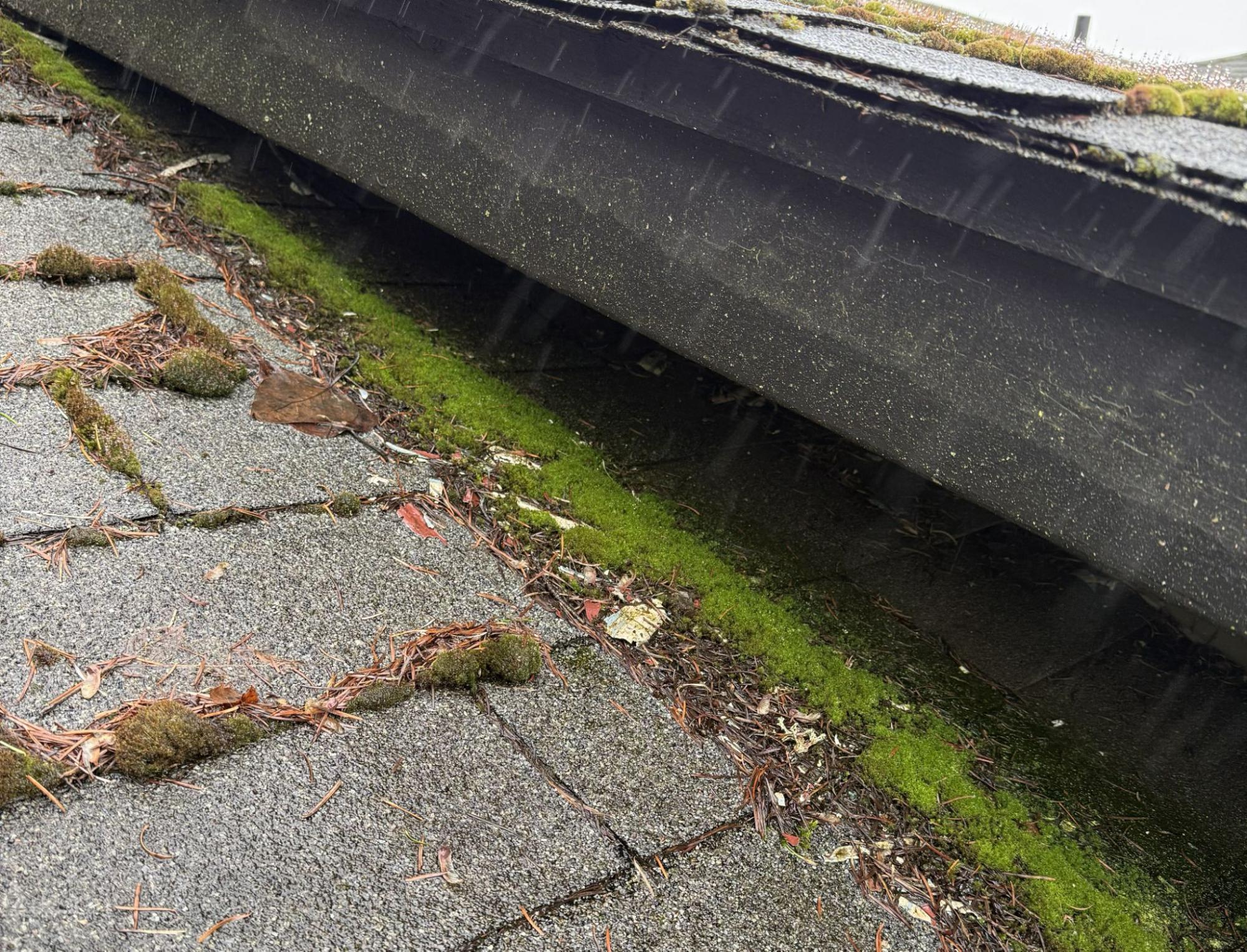
The trouble with moss is how it grows. Tiny root-like threads anchor it in the gaps between shingles, and the thick mat it builds soaks up rain like a sponge. As Oregon State University Extension explains, that growth can lift shingles and let water reach the layers underneath.
Once an edge is raised, runoff can slip beneath it toward the underlayment and roof deck, and the damp moss mat keeps that spot wet long after a storm.
Cleanup done the wrong way causes its own damage. Scraping at living moss or pressure washing it can strip the protective granules from asphalt shingles, and major shingle makers such as GAF and Owens Corning warn against power washing for that reason. Shingle warranties, including IKO’s, generally cover manufacturing defects rather than damage from cleaning, so a roof hurt by pressure washing may not be covered. A gentle method protects both the roof and its coverage.
How a Careful Roof Moss Treatment Works
Whether you handle it yourself or hire a roof cleaning company, a careful treatment kills the moss first and removes it second. The usual order looks like this:
- Check the roof’s condition first. Brittle or lifting shingles may not survive brushing or foot traffic, so a professional roof inspection beforehand shows whether repairs should come first.
- Clear the loose debris. Needles and leaves packed into valleys hold moisture and shield the moss from treatment.
- Treat on a dry day. Choose a day when the roof is dry and no rain is forecast for several hours. Zinc sulfate corrodes copper, so homes with copper gutters or flashing need another option, such as a soap-based product. Protect nearby plants as the label directs.
- Let the moss die before it comes off. Depending on the product, dead moss can take anywhere from a few weeks to a few months to loosen, and fall rain helps rinse it down. Sweep or rinse the rest gently with low-pressure water.
- Clean the gutters afterward. Dead moss, needles, and loose granules wash down and can clog downspouts just as the heavy rain arrives.
If your gutters sag, leak, or overflow once the debris is cleared, Alfred’s Roofing can install a new gutter system built to handle heavy Northwest rain. Treatment only resets the clock, though. Moss returns wherever shade keeps a roof damp, so trimming back overhanging branches to let in more sun is the lasting fix.
When Moss Means Your Roof Needs More Than a Cleaning
Once the moss is gone, look closely where the heaviest growth used to be. These signs point to damage that treatment cannot fix.
Shingle Edges That Stay Lifted
If shingles are still raised after the moss dies and washes away, their seal strips have likely let go. Loose edges are easy for wind to catch, and wind-driven rain can blow right underneath them.
Bare or Smooth Patches
Shingles rely on their colored granules to shield the asphalt from sun and weather. Where moss has pulled those granules away, the exposed spots tend to wear out well before the rest of the roof.
A Soft Feel Underfoot
A spongy section usually means water has been reaching the roof deck for some time. It is not something to test yourself, so leave it to a roofer who can check it safely.
Stained Attic Sheathing Under a Mossy Slope
From inside the attic, look at the wood directly below where the worst growth sat. Dark or damp sheathing in that spot suggests water has already made it past the shingles.
Heavy Moss Across an Older Roof
When moss covers large sections of a roof that is already late in its life, the shingles have often been holding water for years. At that stage, the moss is usually one sign of wider wear across the roof.
When the damage is limited to a few shingles in one area, a targeted roof repair before the wettest months is usually enough.
If it spans several slopes, or the roof is near the end of its service life, patching tends to buy only a season or two. A roof replacement is often the better long-term value in that case.
Common Questions About Roof Moss Removal in Southwest Washington
Is it safe to treat roof moss myself?
Is dried moss on a roof a fire risk?
Can moss treatments harm plants or local streams?
How often does a roof need moss treatment?
Is it safe to treat roof moss myself?
It can be on a low, gently sloped roof, but it is not for everyone. Oregon State University Extension recommends shoes with strong traction, a ladder that extends at least 3 feet above the roofline, and safety lines on steep roofs or wherever the eaves sit more than 16 feet up. Washington requires professional roofing crews to use fall protection on steep roofs starting at just 4 feet. If any of that gives you pause, leave it to a pro.
Is dried moss on a roof a fire risk?
It can add to the risk. The National Fire Protection Association’s Firewise USA program recommends keeping roofs and gutters clear of dead leaves, needles, and other debris that could catch embers, which matters most in late summer when everything is at its driest. Clearing dried moss along with that buildup keeps fuel from collecting near vents, valleys, and gutters.
Can moss treatments harm plants or local streams?
Some can. The Washington State Department of Ecology has found zinc in roof runoff and notes it can harm fish. Treat on a dry day, keep runoff away from creeks, ponds, and storm drains, and protect nearby plants. A soap-based product is a gentler option wherever runoff is a concern.
How often does a roof need moss treatment?
Shade is the biggest factor. A sunny roof may go several years between treatments, while a north-facing slope under tall firs often needs attention every year or two. A quick check each fall, before the wet season builds, keeps regrowth from catching you by surprise.
Get Ahead of Moss Before the Wet Season Settles In
Treating moss as the fall rains return keeps it from settling in for winter and gives you a clear look at the shingles while there is still time for repairs.
If moss is thickening on a shaded slope, or you are unsure whether last year’s growth left damage behind, a fall inspection gives you a straight answer. Alfred’s Roofing is a licensed and insured local team that will tell you plainly whether your roof needs a repair, a replacement plan, or simply clear gutters. Schedule your fall inspection or call (360) 504-4685 whenever you are ready.
