

TL;DR
Vancouver gets about 42 inches of rain across roughly 163 days a year, with July and August the driest months by a wide margin. Once summer closes out, the run of dry days a roof replacement needs gets much harder to find.
Asphalt shingles seal when sunlight warms them, and shorter, cloudier fall days slow that down. Crews can hand-seal instead, but that adds time and cost.
Booking in early fall gets you on the schedule while there are still dry days to work with.
A winter replacement is still possible here. It just takes more flexibility on your end and closer forecast watching on ours.
Every September, Alfred’s Roofing fields the same kind of call. A homeowner in Vancouver or Camas noticed a few curling shingles back in July, meant to phone sooner, and now the calendar says fall is already here. If that’s where you are right now, you are not behind. You are right on time, as long as you move soon.
The best time to replace a roof in Vancouver, WA comes down to weather, and Southwest Washington’s version of that answer is different from what you’ll read on a national roofing site. We get a real dry season, but it is shorter than most homeowners expect, and it closes quickly. Once it does, a crew’s options narrow in ways that affect your timeline, your cost, and how the finished roof performs.
Below, you’ll find what actually makes fall the strongest window for a roof replacement here, what changes if you wait past it, and how to tell whether your roof is a candidate this season or can reasonably hold another year.
Why Fall Is the Best Time of Year for a Roof Replacement in Southwest Washington
Southwest Washington does not get much snow, but it makes up for it with rain. Vancouver averages about 42 inches across roughly 163 days a year, and the total matters less than how it lands. July and August are the driest months by a wide margin. By early December, National Weather Service normals for Vancouver’s Pearson Field put the chance of measurable rain on any given day at about 64 percent, climbing to roughly 67 percent by early January. Two days out of three. For a roofing crew, that is the difference between picking a start date and waiting for one.
A roof replacement needs several dry, workable days in a row, not just one clear morning. The crew strips off the old roofing, exposes the deck underneath, and needs it to stay dry while new underlayment and shingles go on. A downpour partway through means stopping work, and a paused job leaves a Clark County home sitting under temporary protection instead of a finished roof. Nobody can promise dry weather. Booking while dry stretches are still common gives your project a much better chance of running start to finish without a pause.
Why Cold Weather Changes the Way Asphalt Shingles Seal
Rain gets most of the attention, but temperature shapes a roofing schedule just as much. Asphalt shingles come with a strip of adhesive along the back that bonds each shingle to the one below it. That strip is not glue a crew spreads on. It activates when sunlight warms the shingle surface, so how quickly your roof seals depends on sun and heat, not on the date the crew finishes.
That is where a Southwest Washington fall starts working against the clock. Average highs slide from the low 60s in October into the mid to upper 40s through December, and overnight lows settle into the mid-30s, based on those same National Weather Service normals. Days get shorter and cloudier over the same stretch, which leaves less sun to warm the shingles once they are down. Sealing time also shifts with your roof’s slope and which direction it faces, so a shaded north-facing slope can lag behind the rest of the roof.
Cold weather does not stop the work. GAF, one of the largest shingle manufacturers in North America, states in its technical guidance that there is no practical temperature limit for installing asphalt fiberglass shingles as long as the crew takes the right precautions, and its above-40-degree recommendation is about easier handling rather than a hard cutoff. What actually changes is how much extra work the installation takes.
- Hand sealing. When it is too cold for the adhesive to activate on its own, each shingle gets sealed by hand with roofing cement. That holds up fine, and it adds labor hours to your job.
- Warm storage. Cold shingles turn stiff and can crack or curl when bent, so bundles need to be kept warm for at least a day before they go up on the roof.
- Fastener placement. Until the adhesive grabs, nails carry more of the load, so crews adjust where they place them to limit the risk of shingles lifting in wind.
None of this makes a cold-weather roof a bad roof. It means more steps, more hours, and more reliance on the crew getting every detail right on a shorter day. Scheduling while the sun still does part of the sealing for you keeps the whole process simpler.
What Happens If You Wait Past the Fall Window
You can still replace a roof in Southwest Washington after fall. It just gets harder to schedule, slower to finish, and less predictable. Here is what changes once the rain settles in.
Scheduling tightens first. Homeowners are all watching the same weather reports, so requests stack up in early fall and later ones wait behind them. Crews also get fewer usable days, and a wet stretch partway through a job means stopping until the roof dries out. Work that would normally wrap up in a few days can spread across weeks, with your home sitting under temporary protection in between.
The roof you already have keeps aging through the wettest months of the year, and every extra week of rain on worn shingles adds risk. Winter brings one more local factor. Strong east winds push out of the Columbia River Gorge through the colder months, and shingles that have not fully sealed yet are the ones most likely to lift.
A winter roof replacement is not off limits. Alfred’s Roofing takes on cold-weather projects when conditions allow, and they hold up when the crew handles the extra steps properly. What you give up is control over the timing, because by then the weather sets the schedule and you work around it.
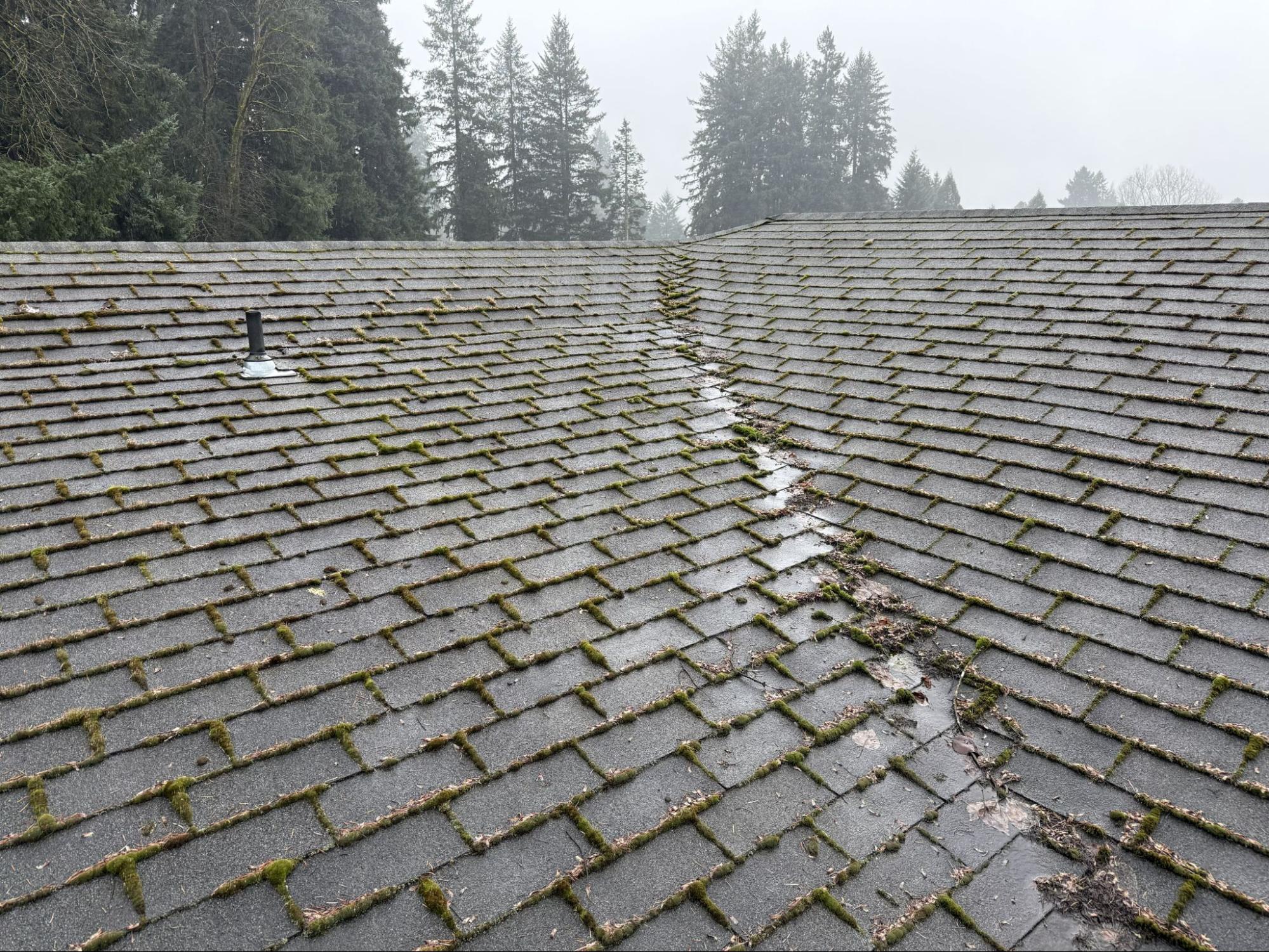
Is Your Roof Actually a Candidate for Replacement This Season?
Not every roof needs to come off this fall. The honest answer usually comes down to three things: how old the roof is, how often it has needed work, and whether the wear is in one spot or spread across the whole thing. Any roofer who reaches a verdict before looking at those is guessing.
How old is the roof?
Architectural asphalt shingles are generally rated to last 25 to 30 years, though roofs in this part of Washington often come up short of that. Steady moisture and moss are hard on shingles, and a roof that would go the distance in a drier climate can wear out sooner here. A roof past the 20-year mark is worth a serious look. If you are not sure how old yours is, paperwork from the last installation usually settles it, and a roofer can estimate the age from the wear pattern.
Has it needed repeated repairs?
A roof that gets patched every year or two is telling you something a single fix cannot solve. When your roof repairs start landing close together, the money spent chasing the same trouble spots adds up without improving the roof as a whole. One repair after a windstorm is normal. Three in four years is a pattern.
What did your last inspection turn up?
The word to listen for is widespread. A single damaged spot is usually a straightforward fix. Wear showing up across several sections of the roof at once generally means the whole system is aging out together, and at that point replacement tends to make more financial sense than another round of patches.
You can get a rough read from the ground or the gutters. Curling or lifting shingle edges, granules collecting in the gutters, and moss growing in the seams between shingles are all signs a roof is wearing down, and moss is the one Southwest Washington homeowners see most. It holds water against the shingle and lifts the edges as it spreads, so it does damage rather than just looking bad. Those signs tell you it is time to have someone look. Getting an actual answer takes a roof inspection, which is the fastest way to find out where your roof really stands before the rain sets in.
How Late in the Season Can You Still Replace a Roof?
There is no cutoff date on the calendar. What changes as fall moves on is which roofing materials still go down cleanly and how much the weather ends up dictating your schedule.
On a typical Clark County home, an asphalt shingle tear-off and reroof is a matter of days rather than weeks. The size of the roof, how steep it is, how many corners and valleys it has, and how many layers of old roofing come off all move that number. Weather is the wild card, because a rain delay does not just cost the hours you lose, it can push the rest of your job behind other work already on the calendar.
Material matters more than most homeowners expect once the season turns:
| Roofing Material | Reliance on warm, sunny weather | What that means for a late-season install |
|---|---|---|
| Asphalt shingles | High | Sealing strips bond when sun warms them. Cold-weather installs still work, but crews may need to hand seal and keep bundles warm first, which adds hours to the job. |
| Metal roofing | Low | Panels fasten mechanically instead of relying on a heat-activated adhesive, so temperature is less of a factor. Heavy rain still stops work. |
| Flat and low-slope roofing | Moderate | The deck has to be dry and clean before the membrane goes down, so steady rain is a bigger obstacle here than cold is. |
If your roof is asphalt shingle, the fall window matters more than it would for other materials. Homeowners weighing a switch usually want to know how the two options stack up long term, and our breakdown of metal roofing versus shingles for Washington homes covers that side by side. Either way, knowing which material you are working with tells you how much the timing actually matters.
Roof Replacement Timing Questions from Vancouver, WA Homeowners
Do I have to commit to a fall replacement, or can I just get an estimate first?
Is it cheaper to replace a roof in the off-season?
Can a roof be replaced in the rain?
Do I need a permit to replace my roof in Vancouver, WA?
How far ahead should I schedule a fall roof replacement?
What if I cannot get on the schedule before winter?
Do I have to commit to a fall replacement, or can I just get an estimate first?
An estimate does not commit you to anything. It gives you your roof’s condition, the scope of work, and the cost, so you can decide on your own schedule. Plenty of homeowners get an estimate in September, sit with the numbers for a few weeks, and book once they have decided. Knowing where your roof stands is useful information whether you replace it this year or not.
Is it cheaper to replace a roof in the off-season?
Not meaningfully, at least not here. Pricing follows your roof’s size, pitch, and materials far more than the month. Some regions see real winter discounts because work stops entirely in the cold, but Southwest Washington does not get a hard freeze, so crews stay busy year-round. Waiting can also cost you, since cold-weather workarounds add labor hours.
Can a roof be replaced in the rain?
Not while it is actively raining. Once the old roofing comes off, the deck underneath has to stay dry until new underlayment goes down, so crews work in dry windows and cover the roof when weather moves in. This is why the rainy season stretches timelines. The work still happens, just in shorter stretches between storms.
Do I need a permit to replace my roof in Vancouver, WA?
Requirements depend on which jurisdiction your home sits in. Some parts of Clark County require a permit for a re-roof, while others do not for a straightforward like-for-like replacement, and cities like Camas and Battle Ground set their own rules. A local roofer will know which applies to your address and should handle the paperwork as part of the job.
How far ahead should I schedule a fall roof replacement?
Sooner than most people expect. Requests cluster in early fall once homeowners start paying attention to the rain, so the earlier you reach out, the more say you have in your start date. Booking in September usually gives you options. Waiting until the rain has already set in generally means taking whatever dry stretch opens up next.
What if I cannot get on the schedule before winter?
Ask about protecting the roof in the meantime. Tarping the most vulnerable areas or a targeted roof repair can hold things together until a full replacement fits, which beats leaving a worn roof exposed through the wettest months. A roofer can also get you on the calendar for the next reliable dry stretch rather than leaving it open-ended.
Where That Leaves Your Roof This Fall
Timing a roof replacement here is less complicated than it sounds. Rain picks up quickly once summer ends, shingles seal best while the sun is still doing some of the work, and the calendar fills as more homeowners reach the same conclusion at the same time. Fall is not a deadline. It is the last stretch where you get to pick the date instead of the forecast picking it for you.
Whether that means replacing your roof this season depends on what is actually happening up there, and that is worth finding out either way. Alfred’s Roofing has been reading Southwest Washington roofs for more than 30 years, across Vancouver, Camas, Battle Ground, and the towns around them. Our team can walk your roof, tell you honestly whether this fall makes sense for your home, and find you a spot on the schedule if it does.
If your roof turns out to have another year in it, a summer check puts you ahead of this decision next year instead of making it in September. And if you would rather just know where you stand, reach out to our team and we will take a look.
